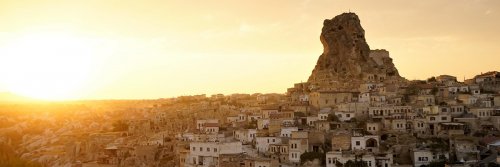
The landscape of Southeastern Anatolia is marked by rugged mountains, fertile plains, the mighty Euphrates and Tigris rivers, and the many layers of flaky pastry and sweet syrup of the beloved dessert, baklava, which have sustained civilizations for millennia.
The climate ranges from semi-arid to Mediterranean, supporting diverse agriculture, including cotton, pistachios, and citrus fruits. Locals have numerous theories about the birth of this delectable creation, baklava: either a pastry chef accidentally dropped nuts into the dough, or it was created to use up leftover bread and nuts. Beneath those crispy, honey-drenched 40 layers of phyllo pastry lies centuries of geopolitical drama, religious symbolism, and a pure pastry obsession, the belief that it’s so delicious that once you begin eating it, you can’t stop, which leads to warnings about ‘baklava addiction’.
The origins date back to ancient times, with a chaotic history shaped by the influences from the Assyrians, Persians, and Byzantines. At the height of the Ottoman Empire, baklava was revered not only as a delectable treat but also as a potent aphrodisiac, owing to its rich ingredients such as honey and pistachios. Palace chefs believed that the spices used in baklava could influence desire and tailored their recipes accordingly using cardamom for men, cinnamon for women, and cloves for both, reflecting a nuanced understanding of culinary aphrodisiacs and gender.
In the 1500s, the Sultan would present hundreds of trays of baklava to the Janissaries, the empire’s elite soldiers, during a grand Ramadan ceremony called the Baklava Procession, symbolizing both generosity and the dessert’s importance in Ottoman society. This tradition underscored baklava’s status as more than just a sweet—it's a symbol of loyalty, celebration, and imperial power. By 1826, the ceremonial giving of baklava had become a form of political and social cohesion, with its rich flavors and symbolic importance elevating it from ordinary confectionery to a cultural icon that could incite passions and unrest, illustrating how food can influence societal dynamics and reflect the values of an empire.
Despite its reputation as a refined treat of culinary significance, the making of baklava was once considered to be a ‘royal secret’ whereby sultans and kings would employ spies to steal the recipes from their rivals. They weren’t the only ones accused of stealing secret recipes: the rivalry between neighboring towns over who made the best baklava also sparked many clandestine spying adventures. Baklava is used as a humorous “peace offering” during local disputes; a tray of sweet, sticky baklava is often presented to settle arguments, with people joking that no fight can survive after a bite of its sweetness. Considered a ‘rich man’s treat’ getting a piece of baklava to savour wasn’t a casual affair and was predominantly reserved for the ultra-wealthy. Those paper-thin phyllo sheets were rolled by hand, a highly specialized skill, and honey and nuts were really expensive. The peasants would say, ‘I am not rich enough to eat Baklava in my house.’
Culturally, Southeastern Anatolia is a melting pot of ethnicities and religions, including Turks, Kurds, Arabs, and Assyrians, contributing to its vibrant and diverse cultural and culinary scene that is especially notable for its flavorful, hearty dishes such as kebabs, stews, and sweets, which reflect the region’s agricultural bounty and cultural influences. The region also has a profound religious significance, with numerous mosques, churches, and ancient temples. The city of Şanlıurfa is a major pilgrimage site, believed to be the biblical city of Ur and the birthplace of Prophet Abraham. Mardin, with its historic stone houses and religious structures, exemplifies the harmonious coexistence of different faiths and cultures.
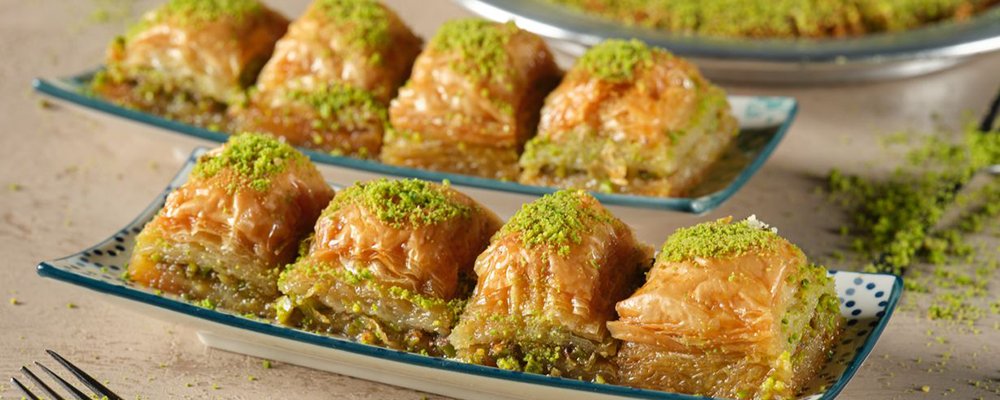
And the city of Gaziantep is renowned for its baklava. Gaziantep’s baklava is distinguished by its high-quality pistachios and a unique preparation method that involves layering and slow baking to achieve the perfect balance of crunch and sweetness. The city holds protected status for its baklava from the European Union. A couple of the best establishments in Gaziantep to wrap your lips around a piece of heavenly baklava are Köşkeroğlu and Güllüoğlu, both located on the ground floor of the car park in Karaköy, a few meters from the Karaköy tram stop or down the hill from the Witt Istanbul Hotel. İmam Çağdaş, founded in 1887, is another emporium of sweet baklava, but it can be swamped with tourists.
The perfect baklava to send you to heaven with each mouthful will crack when you put a fork into it, the aroma of creamy fresh butter should invade your nostrils, and the taste should be sublimely sweet with the perfect contrast between the crispness of the pastry and the chewy nutty filling of pistachios. The pistachios used are often locally sourced, contributing to the distinctive, vibrant green color and intense aroma that set Gaziantep baklava apart from other varieties. The sweetness of the baklava is perfectly balanced with the richness of honey or syrup poured generously over it after baking. This syrup is usually infused with subtle hints of lemon juice or cinnamon, imparting a fresh, citrusy tang that complements the nuts' natural flavor. The syrup seeps into the layers, making each bite a moist symphony on your palate. Now my mouth is drooling!
If you gorge yourself on baklava and end up with heartburn, it means that the ingredients weren’t of good quality. Drown your pain with mint tea, or lick some salt, or eat an olive!
Gail Palethorpe, a self proclaimed Australian gypsy, is a freelance writer, photographer and eternal traveller. Check out her website Gail Palethorpe Photography and her Shutterstock profile.