Chiang Rai may not be high on your agenda when in Thailand. Still, it’s worth taking the time out to head to this northernmost major city about 860 kms from Bangkok and 200 kms northeast of Chiang Mai, sitting near the extraordinary Golden Triangle region. Some would call it the ‘back of beyond’, but this entire area is virtually a step back in Thailand-time that fascinates any curious mind. Quirky markets, cafes with signs saying, ‘leave guns at the door’, eccentric local characters, and traditional cuisine that will have you either drooling or raising your eyebrows in astonishment. Known for its eclectic, colorful, intricately designed temples, cloaked in mountains and tea plantations, Chiang Rai is rich in Lanna culture.
Chiang Rai's temples are renowned for their spiritual significance and artistic beauty. It’s home to some of the most extraordinary Buddhist temples, showcasing a blend of traditional Thai design and contemporary artistic expression.
The White Temple (Wat Rong Khun)
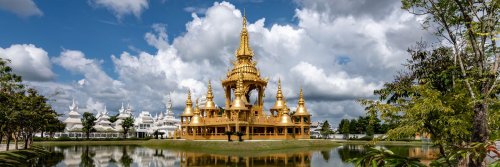
There are temples and then temples, and so many more temples in Thailand, but you will never have seen a temple like ‘The White Temple’. Much controversy surrounds what the locals of Chiang Rai dub the ‘white blancmange’. It’s like stepping into a grotesque sparkling fairytale Disneyland on steroids. You would not blink an eye if Snow White and the Seven Dwarfs popped up out of nowhere. It’s so over the top white, silver, and mirrors that the nickname referring to the sickly-sweet dessert made from milk, cream, and sugar is very apt.
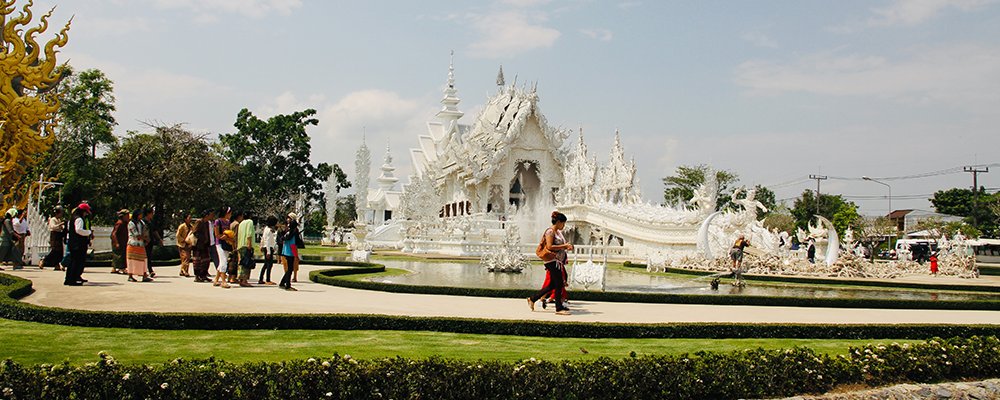
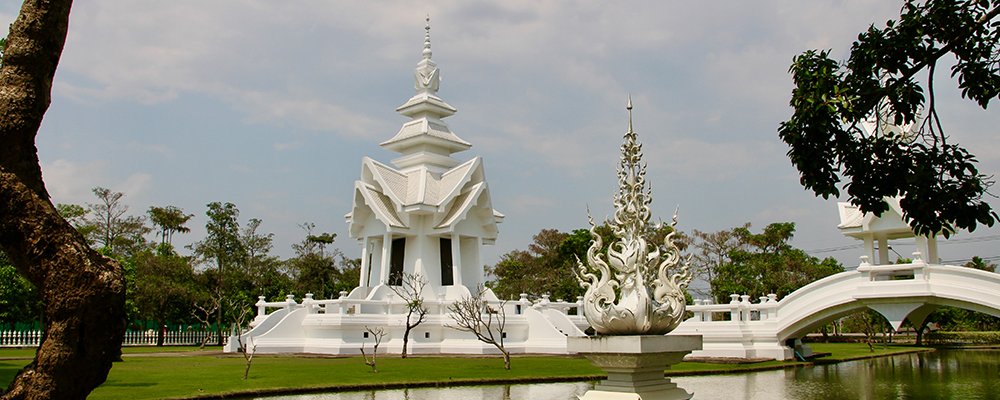
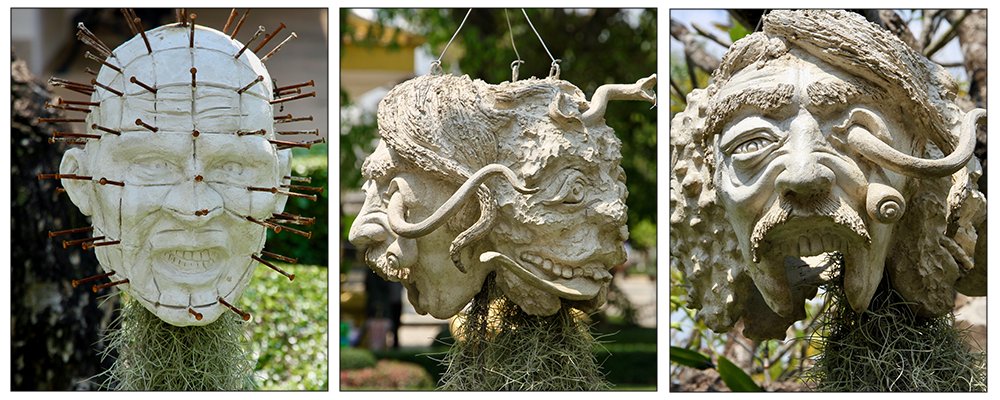
Designed by the renowned visual artist Chalermchai Kositpipat, the White Temple symbolizes purity and the Buddha’s teachings, with its shimmering, white surface representing the Buddha’s purity and the glass embellishments symbolizing wisdom. The temple’s architecture is modern, yet it incorporates traditional Buddhist motifs, creating a surreal and captivating sight. In contrast to this childlike castle fantasy, the grounds are saturated with sculpted grotesque apparitions that should have stayed safely locked up in what must be a demonic and disturbed brain. It’s perplexing what gargoyles and aliens have to do with a Buddhist temple: maybe it’s the modernization of the demons of old, bringing them into the 21st-century perception of evil.
The Blue Temple (Wat Rong Suea Ten)
Built on the ruins of an older temple, the modern Buddhist temple named Wat Rong Suea Ten was only completed in 2016. Its name translates to ‘House of the Dancing Tiger’: apparently, tigers used to jump over the river near the site. Created by local artist Phuttha Kabkaew (Salanok), an apprentice of the creator of the White Temple, its striking cobalt blue color and intricate architecture stand out as a modern addition to the region’s rich spiritual landscape.
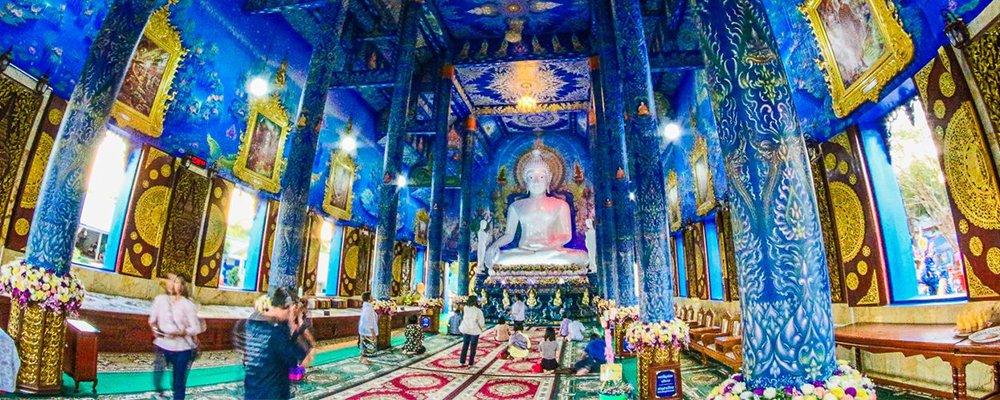
Its vivid blue hue symbolizes purity, wisdom, and the sky's infinite nature, creating a serene, otherworldly atmosphere that leaves you in awe of its contemporary artistic elements. The main prayer hall features elaborate murals, intricate carvings, and statues that depict Buddhist teachings and stories. The temple’s roof is adorned with elegant, sweeping curves, and its exterior features delicate gold accents that contrast beautifully with the deep blue walls. One of the most iconic features is the large, striking Buddha statue located inside the main hall, which embodies peace and enlightenment.
Chiang Rai is a landscape of temples numbering over one thousand:
Wat Huay Pla Kang is famous for its massive statue of the Goddess of Mercy, Kuan Yin. This temple combines Chinese and Thai architectural influences and offers panoramic views of the city. Its serene atmosphere and beautiful murals make it a peaceful retreat. Another significant temple is Wat Phra Kaew, which once housed the Emerald Buddha, Thailand’s most sacred image. Although the original statue is now in Bangkok, the temple complex remains an important spiritual site in Chiang Rai, featuring classic Thai architecture and lively markets. Wat Phra Singh in Chiang Rai is also notable, known for its impressive chedi and beautiful murals depicting Buddhist stories. Beyond these famous sites, many smaller temples are scattered throughout Chiang Rai, each with its own charm. Wat Tham Pla, located near a limestone cave, is famous for its resident giant catfish and serene cave temples, offering a spiritual experience combined with natural beauty. Wat Tham Phra is another cave temple known for its peaceful ambiance and meditation retreats, attracting those seeking spiritual solace amidst nature.
Not a temple but an artistic museum worth your time:
The Black House Museum (Baan Dam Museum)
Sometimes referred to as a temple, Baan Dam is a museum that will have you shaking your head in disbelief and total fascination. Founded by the renowned Thai artist Thawan Duchanee in 1988, it’s a striking collection of buildings and artworks that reflect his distinctive artistic vision and deep appreciation for Thai culture and spirituality. The complex spans over 15 acres and features a series of black-painted wooden structures in traditional Thai architecture with an extensive collection of art, artifacts, and sculptures that evoke a sense of mysticism and contemplation. It is one artist’s bid for self-expression on his own property.
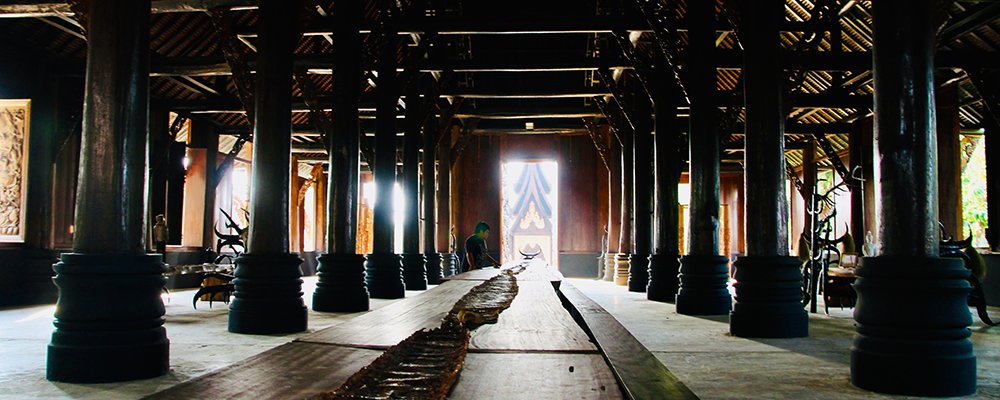
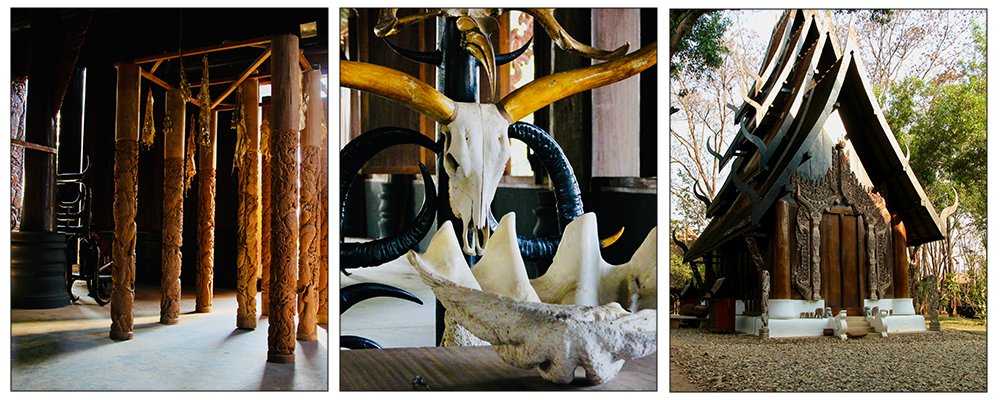
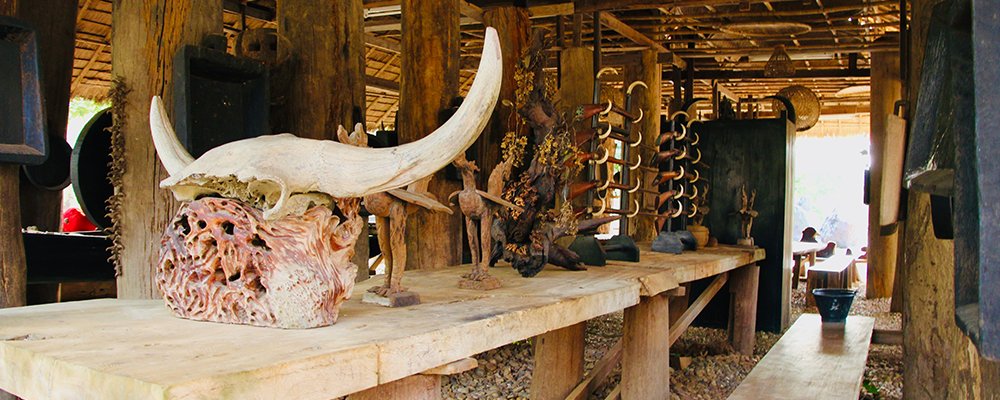
The structures are built using dark wood and are adorned with intricate carvings, skull motifs, and animal figures, creating an atmosphere that is both eerie and fascinating. His artworks often incorporate elements of Buddhism, Hinduism, and indigenous Thai beliefs, blending them into thought-provoking pieces that challenge viewers to consider existential questions. Walking into the main building is what one would imagine entering a cavernous Dothraki banquet hall, a witch’s or a demon's lair would be like. Light and shadow play across the arranged carved teak poles, window shutters, open doorways, and the roof like rays of illusion on a somewhat morbid collection of artifacts. Mammoth sculptured chairs of leather, hair, skulls, and bones surround several huge wooden slab tables. One extremely long table directly down the middle of the hall would be the perfect setting for a giant's dinner party. Snakeskins were laid out alongside an odd collection of old native idols, Buddha statues, large seashells, and animal skins. It’s as if the artist is paying homage to the dead animal kingdom. For some, it will be an assault on the senses, in a dark, foreboding way. Death permeates every object on display, despite the ornate and artful arrangement of these curiosities.
Gail Palethorpe, a self proclaimed Australian gypsy, is a freelance writer, photographer and eternal traveller. Check out her website Gail Palethorpe Photography and her Shutterstock profile.