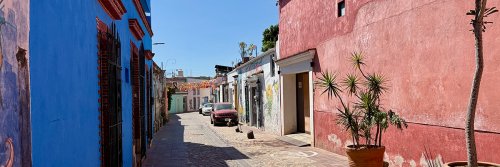
Oaxaca in Mexico, with its bohemian vibe, is known for its dynamic street art that reflects its cultural heritage, indigenous roots, and social issues. The walls of the buildings are canvases for local artists, whose creativity often blends traditional motifs with contemporary styles. It’s a showcase of Oaxaca’s history, of ongoing political clashes, and of the inequity and economic disparity faced by its locals, presented in a powerful visual form of social statements. The murals and graffiti dotted around the town, often hidden by masses of hanging brilliant yellow and orange calendas or rainbowed swathes of bougainvillea, some worn by time like peeling paper, present a living art gallery that’s a feast for your eyes.
Much of the street art can be found in the neighborhoods of Jalatlaco and Centro Histórico, where it depicts themes such as indigenous culture, historical events, and the struggles for social justice. It mirrors the connections of the region’s indigenous communities, incorporating patterns, stories, and symbols from the Zapotec and Mixtec cultures, prompting the beholder to reflect on the issues at hand. Street art in Oaxaca fosters a sense of community and encourages dialogue between artists and residents, forming a vital part of Oaxaca’s constantly evolving urban identity.
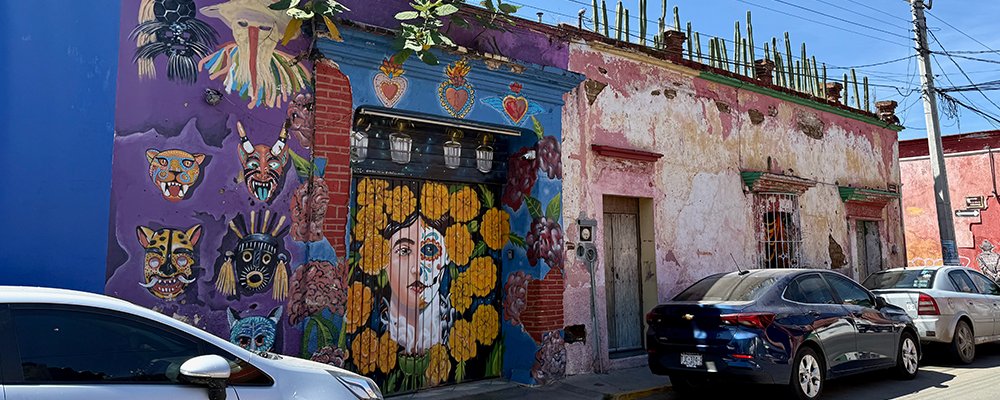
The city has a relaxed attitude towards graffiti and murals, which in turn revitalizes neglected neighborhoods by turning its sometimes crumbling blank walls into storytelling works of art that attract tourists and arty souls, thereby contributing to the local economy and cultural tourism. Recently, efforts have been made to preserve and promote the city’s street art as a visual form of cultural expression that shapes Oaxaca’s contemporary identity.
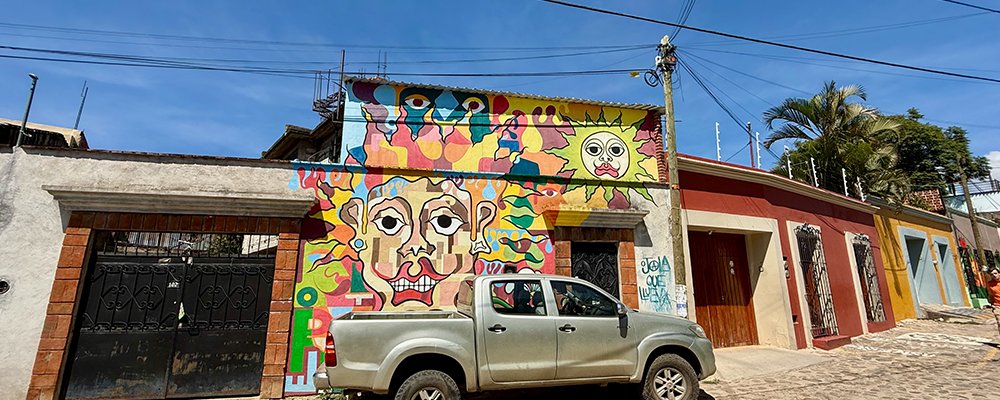
The unique styles of the local artists blend into the walls using unconventional materials like woven twine. Bright pictures depict local life, its legendary past, flora and fauna such as giant hummingbirds, and there are plenty on show depicting the Day of the Dead when skeletons come to the fore, both grisly and comical. The street art isn’t confined to tourist areas; it can be found in alleys, industrial enclaves, and residential areas.
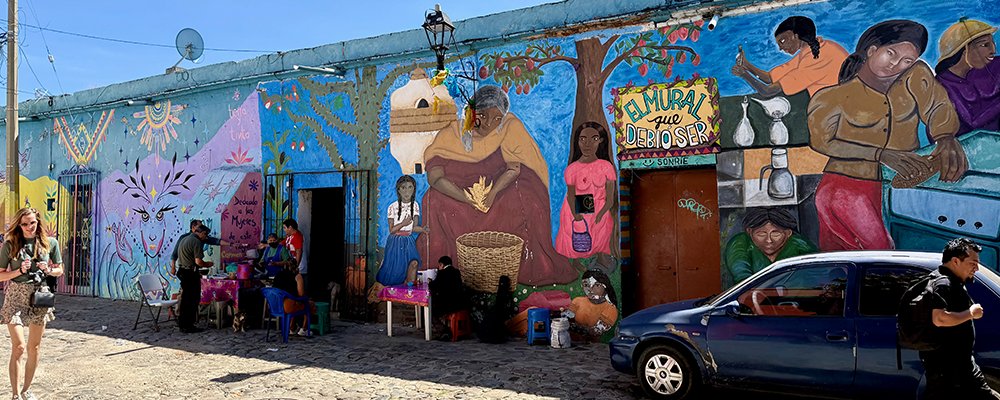
The famous artists of the region include Yescka (founder of the political art collective ASARO), who often depicts subversive cultural icons, while the influential art collective ASARO (Assembly of Revolutionary Artists of Oaxaca) uses woodblock prints and stencils to put their ‘protest art’ of poverty and political repression into the public domain. Lapiztola is another art collective formed after 2006, famous for its intricate stencil work focusing on social justice, indigenous rights, and migration. Other artist collectives include Chiquitraca, known for honoring traditional figures and community elders, and the Subterráneos collective, which is the driving force behind ‘paste-ups’ (wheat-based paper art) that celebrate indigenous culture and rural people and challenge the gentrification of the city.
There are individual artists, like Cix Mugre, known for his mystical creatures. While mural artists Antonio Ckoser and Roberto Dominguez paint in flourishing strokes, the occupation of the owner of the building. The prolific artworks of Samael Aguero often feature children and iconic animals such as ravens. The work of Irving Cano is well known, as he’s an internationally recognized graffiti artist—he blends the region's textiles and geometric patterns into contemporary visions. There’s a growing number of female artists, such as Katalina Manzano, who paints striking depictions of the region's finely detailed flora and fauna, and Hoja Santa Taller, who creatively depicts social issues, ancestry, and the power of the female spirit.
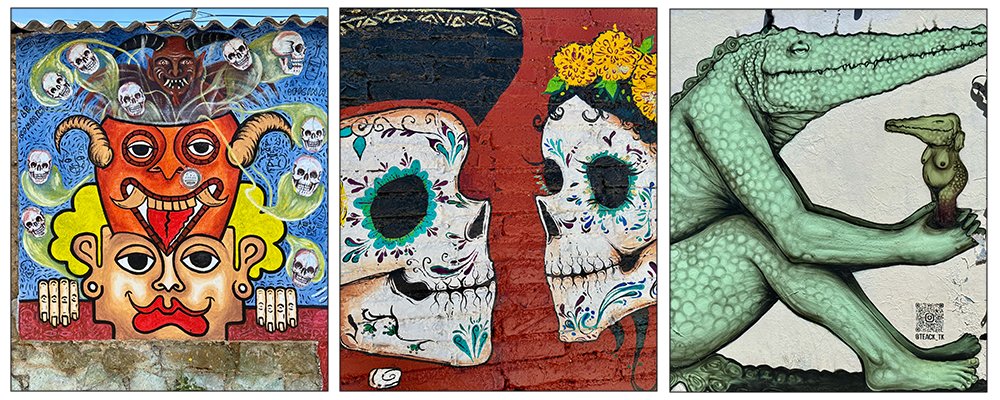
The notable areas awash in street art are the neighborhoods of Jalatlaco, for its folklore-themed works, complemented by the streets of colorful architecture. The hub of Xochimilco is a treasure trove of diverse styles on practically every wall, even unique old train cars, integrating this unique urban landscape.
The street art of Oaxaca is a canvas that captures the city’s soul—its history, struggles, and vibrant spirit—making it a must-see for anyone interested in the intersection of art, culture, and social activism. You can take a walking or bike-guided tour, or navigate solo this living art gallery to hunt down the street art that will provide a deeper understanding of the world of its creators.
Gail Palethorpe, a self proclaimed Australian gypsy, is a freelance writer, photographer and eternal traveller. Check out her website Gail Palethorpe Photography and her Shutterstock profile.