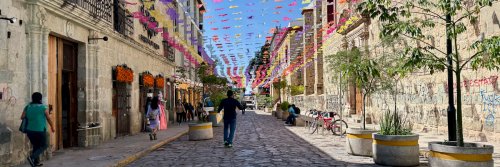
It’s a double-take wherever you meander in the vibrant city of Oaxaca, Mexico. The streets are literally eye candy, especially for anyone into taking mega photos on holiday to create FOMO amongst your friends stuck at home.
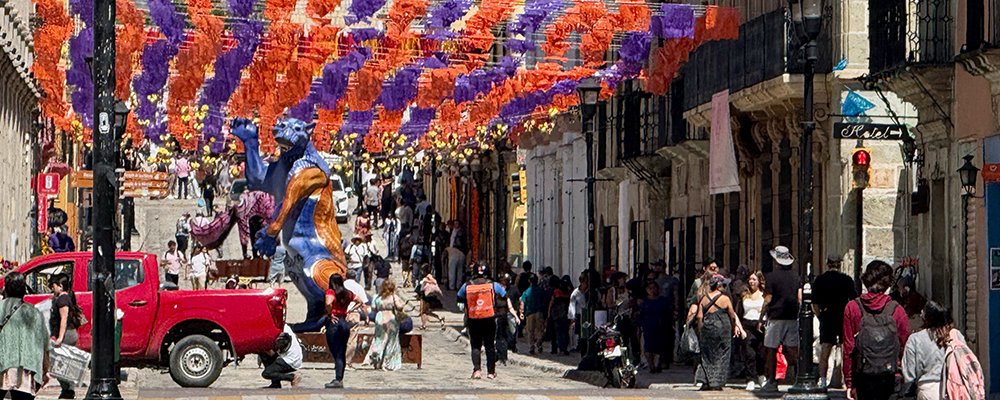
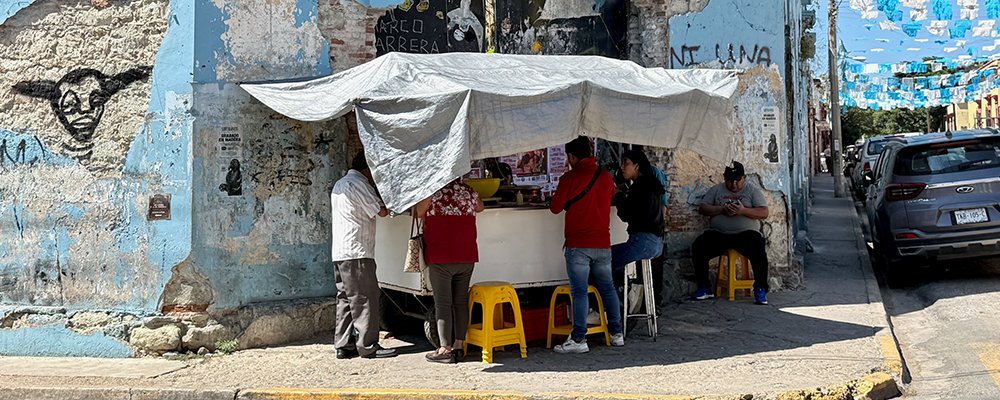
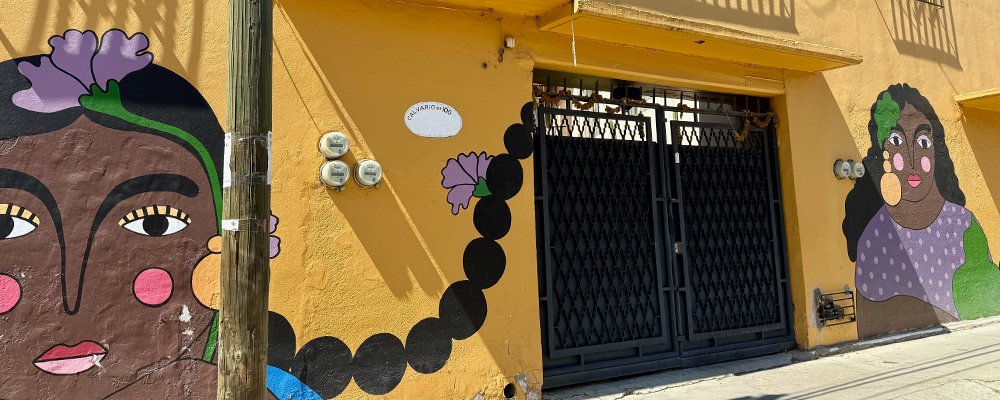
Flags drape across roads, fluttering in the breeze, and when the sun is out, they cast a hue of whatever color they are over the roadway below like a magical paintbrush. Dynamic street art splashes the walls of buildings that are painted like a rainbow, street hawkers haunt plazas trying to sell their wares, old buses rumble along skinny roads, and some choke on smoky plumes when going uphill. The city streets are a combination of flat and winding uphill treks. Outdoor cafes line like sentinels around the city plazas where locals congregate to chat in the shade of massive trees, hiding from the blazing sun. Occasionally, a local band will set up for a performance that takes your breath away with their musical talent. Street sweepers ply their designated areas pulling trolleys with large bins over time-worn cobblestones, and various cactus plants peek over the edges of balconies and rooftops. Old weathered wooden doors lead into hidden restaurants, and because it’s close to the celebration of ‘The Day of the Dead’, skeletons cavort on the facades of buildings, and do acrobats around street lighting where power lines hang like spaghetti. Hilarious skeletons, some dressed up, litter pathways or are put in comical situations along the walkways. It’s a riot of colour and a feast for the visual senses.
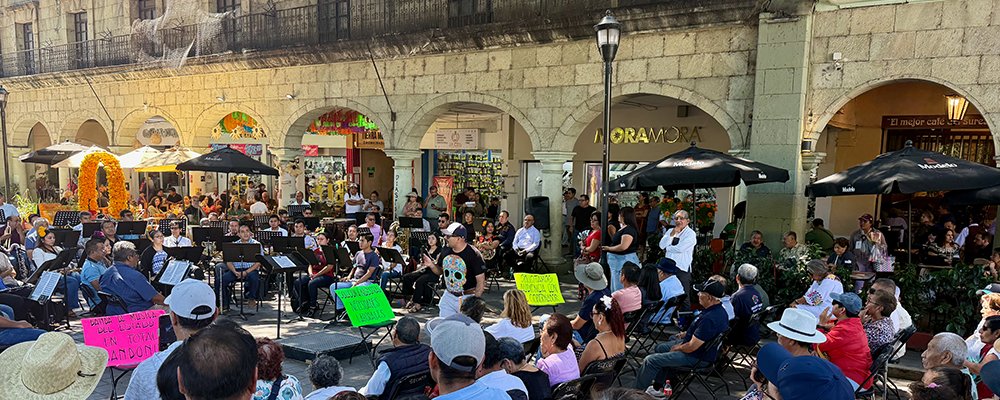
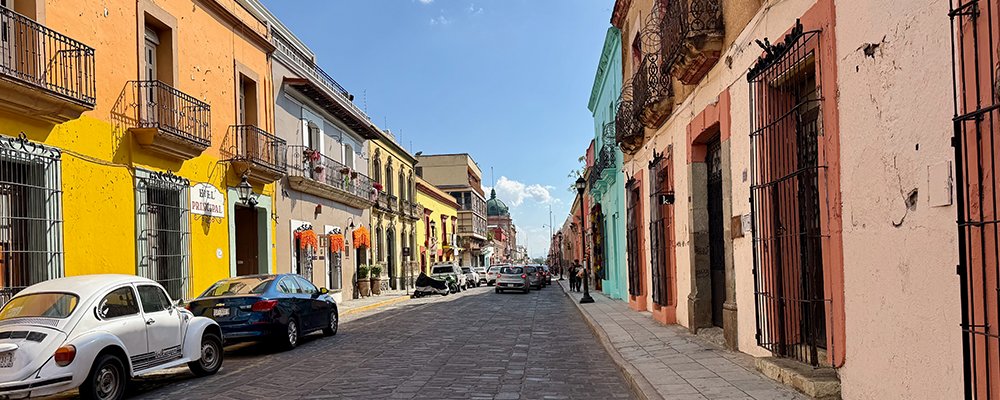
Oaxaca is known for its rich cultural heritage, incredible architecture, and diverse indigenous traditions. Located in the southern part of the country, Oaxaca is famed for its picturesque landscapes, historical significance, and lively arts scene. With a population of around 300,000 residents, it offers a unique blend of colonial charm and indigenous authenticity that attracts travelers from around the world. Its history dates back thousands of years, making it one of Mexico's most culturally significant regions.
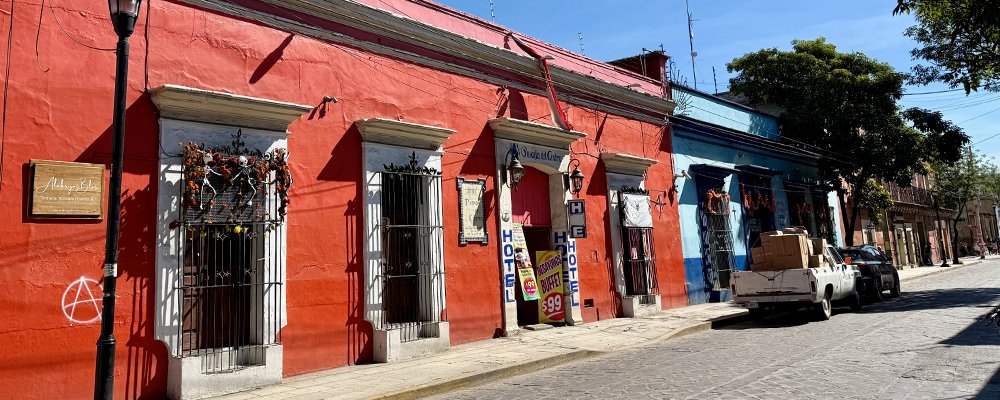
Founded in 1529 on the site of the ancient Zapotec city of Monte Albán, Oaxaca boasts a deep historical legacy that is visible throughout its streets and landmarks. This is where ancient civilizations flourished into sophisticated societies from as early as 500 BCE—the Zapotecs and Mixtecs. Snuggled into the Oaxaca Valley, the Zapotecs built the incredible city of Monte Alban (UNESCO World Heritage Site), which served as the political, economic, and religious hub for centuries. A wonderland of yesteryear, Monte Alban’s tombs, pyramids, and plazas are a testament to the advanced architectural and astronomical knowledge of its inhabitants.
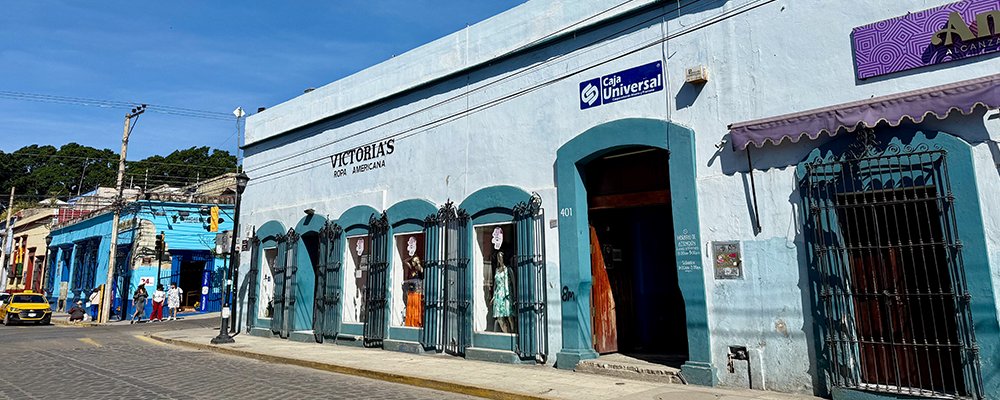
About 900 CE, with the decline of the Zapotecs, the Mixtecs rose to power in the mountainous regions. These people were known for their codices (ancient manuscripts), intricate goldsmithing, and sophisticated social structures. From about 900 to 1521, during the Postclassic period, Oaxaca morphed into numerous city-states vying for dominance. The city became a hub for trade between the highlands and the Pacific Coast and the Gulf. Spanish conquistadors arrived in the early 16th Century. It was in 1521 that Hernán Cortés and his army defeated the Aztec empire, then moved south to encounter the indigenous people of Oaxaca. In 1529, the Spanish established the city of Oaxaca de Juárez as a colonial stronghold. It was during this period of exploitation of local resources (gold and minerals) by the Spanish that the indigenous people were forced into Christianity. In spite of this, the local people preserved their artisanal crafts, religion, and language, blending it with Catholic traditions. Throughout Oaxaca’s history, it has remained an iconic symbol of cultural resilience with a rich and diverse indigenous heritage that hasn’t been lost.
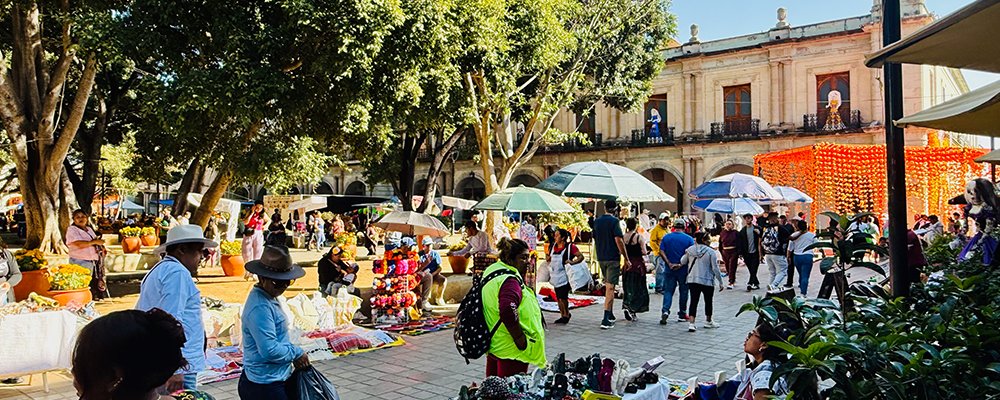
The historical heart of the city is a UNESCO World Heritage site—stunning colonial buildings, buzzing plazas, and vibrant markets. The Cathedral of Our Lady of the Assumption, with its eye-catching Baroque façade, is the central figure in the city’s skyline, while close by is the Santo Domingo Church, a grand monastery turned cultural hub that houses incredible religious art and offers a surreal picture of the city’s spiritual history. Because of its differing indigenous cultures, the city is a melting pot of its historical peoples—Zapotec, Mixtec, and various other hillside communities. Each has retained their own traditional crafts and languages, which are showcased in the marketplaces dotted around town. Artisan goods, from pottery and jewelry to beautiful handmade textiles, can be found throughout the streets, dangling on hangers or laid out neatly in vibrant rows on the ground at markets. Don’t miss poking your nose into one of the many artisanal shops, especially the Mercado de Artesanías.
Oaxaca is committed to sustainable tourism, preserving cultural traditions, promoting local artisans, and protecting its beautiful natural environment. Oaxaca is a captivating city that I fell in love with for its bohemian vibe and artistic bent, which encapsulate Mexico's very soul.
Gail Palethorpe, a self proclaimed Australian gypsy, is a freelance writer, photographer and eternal traveller. Check out her website Gail Palethorpe Photography and her Shutterstock profile.