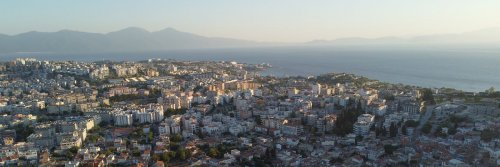
Beyond the beachfront of Kuşadası lies one of Türkiye’s richest open-air treasure troves. Within easy day-trip distance, you can move from mighty Roman avenues to sacred Christian shrines, from Hellenistic temples to forgotten oracle cities. The Aegean coast is less a holiday stop and more a time machine.
Ephesus Ancient City
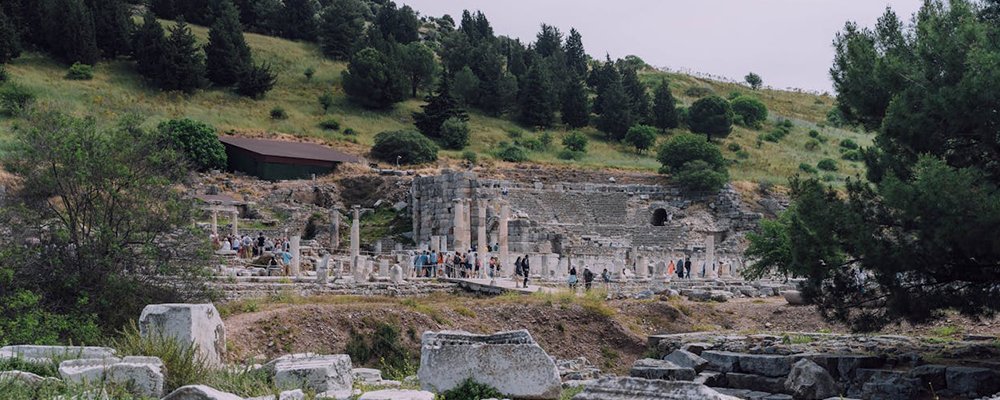
Just 20 minutes from Kuşadası, Ephesus is the headline act,and rightly so. Once one of the Roman Empire’s great trading capitals, this UNESCO-listed city stuns with marble streets, the soaring Library of Celsus, vast Great Theatre and remarkably preserved terraces. Walking here feels cinematic, with every column and carved façade telling stories of emperors, merchants and early Christians.
House of the Virgin Mary
High above Ephesus, this peaceful stone shrine is traditionally believed to be where Mary spent her final years under the care of St. John. Surrounded by forest, it offers a quieter, spiritual contrast to Ephesus’s grandeur. Pilgrims from around the world visit, but even non-religious travellers appreciate the tranquil atmosphere and panoramic setting.
Temple of Artemis
Near Selçuk stand the remains of one of the Seven Wonders of the Ancient World. Today, only fragments and a reconstructed column survive, but the historical weight is immense. Built in the 6th century BCE and once among the largest temples ever constructed, this was a centre of Ephesian identity and devotion.
Basilica of St. John
On Ayasuluk Hill, the ruins of this 6th-century basilica mark the traditional burial site of John the Apostle. Commissioned by Emperor Justinian, it was once one of the great churches of the Byzantine world. Today, sweeping views, ancient stonework and nearby fortifications make it a must for those tracing Christianity’s early roots.
Magnesia
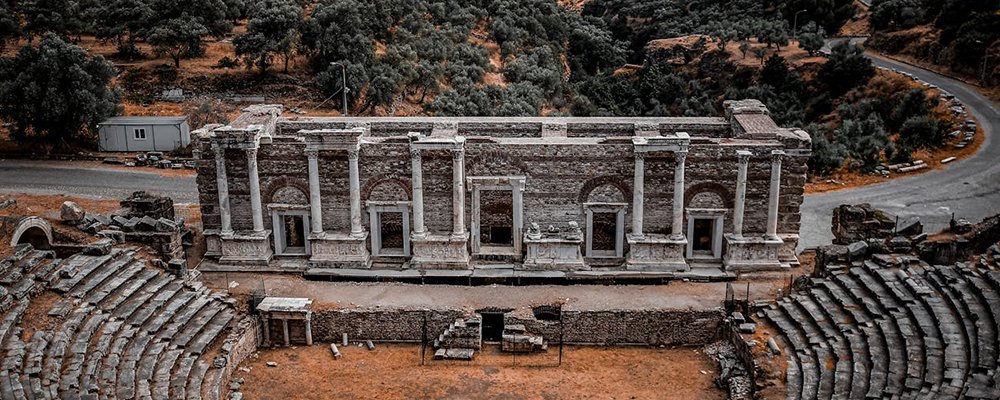
Hidden in the fertile plains of Aydın Province near Ortaklar, the ruins of Magnesia on the Maeander offer one of western Türkiye’s most underrated archaeological treasures. Founded by settlers from Thessaly and Crete, this ancient Greek city later flourished under Roman rule, occupying a strategic position between Ephesus, Priene and Miletus. Visitors can wander through the remains of a once-grand city famed for its impressive urban planning and monumental architecture. Highlights include the vast Temple of Artemis Leucophryene, designed by celebrated architect Hermogenes, the partially restored Zeus Temple, a dramatic theatre, agora and one of Anatolia’s best-preserved ancient stadiums.
Priene
About an hour south of Kuşadası, Priene is dramatically set against Mount Mykale. This ancient Greek city is smaller than Ephesus but offers a more atmospheric, less crowded experience. The Temple of Athena, the steep theatre and grid-planned streets reveal sophisticated Hellenistic urban design. Priene is a gem of a discovery for travellers.
Miletus
Once a powerful port city and home to philosophers like Thales, Miletus was a centre of trade and thought. Its enormous theatre remains the star attraction, but baths, colonnades and civic ruins reveal a city that once rivalled the greatest in Ionia.
Didyma: Temple of Apollo
Pair Miletus with nearby Didyma, home to the colossal Temple of Apollo. This sanctuary housed one of the ancient world’s most important oracles, second only to Delphi. Massive columns still tower above visitors, making it one of the region’s most visually powerful sites. The scale alone is breathtaking.
 Andy Probert is a freelance journalist whose work about global travel news, aviation, business and human-interest features has appeared internationally in print and digital formats.