Until recently, I had never been to Trier, Germany’s oldest city. In fact, I had never even heard of it. Trier was just an optional excursion listed on my Uniworld Rhine, Moselle & Belgium Grand Discovery river cruise itinerary.
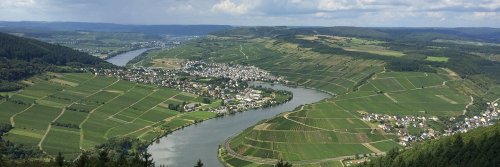
From the port of Cochem in southwestern Germany, I chose to do an included day trip to Trier featuring a walking tour and a few hours of free time. The one-hour coach trip from Cochem transported us along the beautiful Moselle River to Trier, near to the border with Luxembourg.
I arrived in Trier on a summer Saturday and the surprises started coming. One surprise after another.
The Roman Surprise Packets
Trier was established as Augusta Treverorum in 16 BC under Emperor Augustus. Trier has been continuously inhabited since, making it the oldest city in Germany. One of the largest cities in the Roman Empire, it was the capital of the Western Roman Empire and known as "Roma Secunda" (second Rome).
Our walking tour guide, Juliane, took us to three Roman sites – the Porta Nigra, the Basilica of Constantine (Aula Palatina) and the Imperial Baths.
We started at the Porta Nigra. Construction of the Porta Nigra started in 180AD during the reign of Emperor Marcus Aurelius. Built from massive, light-coloured sandstone blocks with iron staples and no mortar, Porta Nigra is a feat of Roman engineering and the best-preserved Roman city gate north of the Alps.
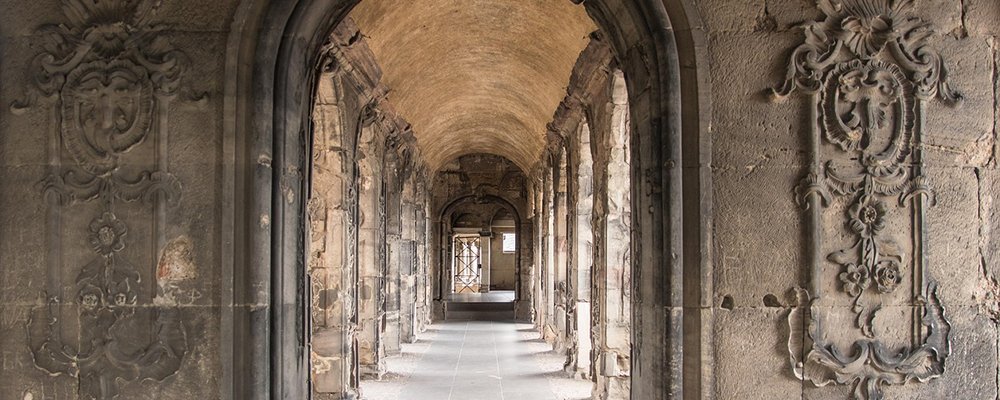
The original Roman name of the Porta Nigra is not known. As the sandstone weathered and the manganese present in the sandstone oxidised, the city gate darkened. This resulted in the name, Porta Nigra (Latin for Black Gate), being coined in Medieval times.
Standing thirty metres high with four main accessible levels, even today visitors can climb the stairs to the top to enjoy views over Trier. Incredible!
A short walk through the heart of Trier and the magnificent Aula Palatina was in front of us. Once the reception and throne room for the Imperial Palace, people would come for audiences with the Emperors Constantius Chlorus and Constantine the Great. This huge, elongated, high-ceilinged brick hall dates from around 300AD. The walls, constructed from Roman concrete and brick, are over three metres thick in some places yet, in Roman times, there was a wall and underfloor heating system!
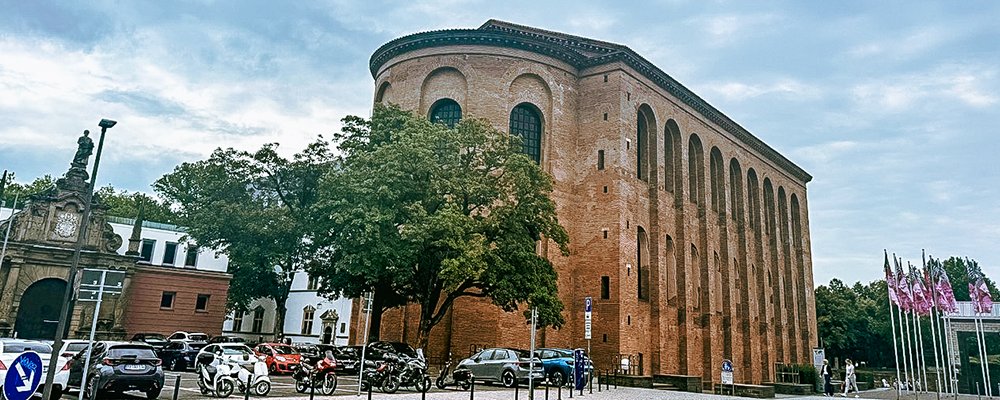
The Aura Palatina is the largest surviving Roman single-room structure. Both the apse (which once housed the Emperor's throne) and the west wall are original Roman constructions. Now functioning as a Protestant church, the Aura Palatina is free to enter. I sat in a pew and marvelled at the sheer size and the amazing engineering.
Another short walk and we reached the Imperial Baths. The Romans loved their bath complexes for bathing and also for leisure and social gatherings. The Imperial Baths date from the early fourth century during the reign of Emperor Constantine I.
Underneath the complex is a network of underground passageways. We toured through some of these passageways with Juliane as she told us stories of what was planned to be the largest bath complex in the entire Roman Empire outside of Rome.
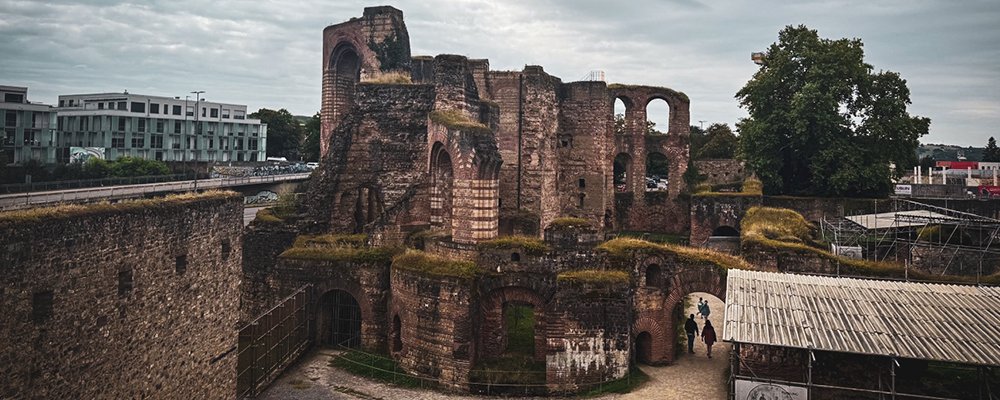
It was intended that slaves would sit on toilet seats to warm them up whilst underfloor heating would warm the various bathing pools of hot, cold and room temperature baths. Never fully completed, the Baths were later repurposed for such varied uses as military barracks and a castle. I wandered around the substantial ruins in awe.
Gingerbread Town
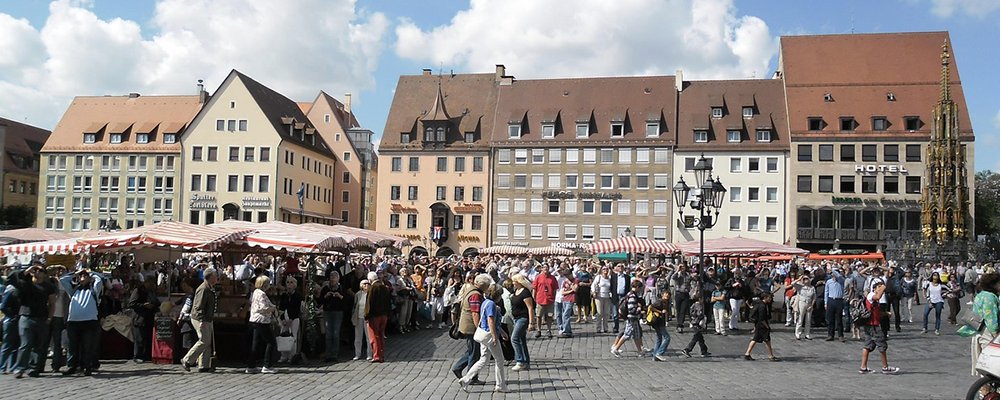
Juliane farewelled our walking tour group at the gingerbread-look Main Market Square called Hauptmarkt which has been a marketplace since the tenth century. Badly damaged in WWII, the colourful building facades have been lovingly restored so that the city’s living room looks like it was lifted from the pages of a fairy tale.
I had lunch al fresco at Hauptmarkt, dining on schnitzel and sipping Bitburger Beer whilst locals chatted and buskers played music and sang. After lunch, I wandered along the main pedestrian shopping streets which radiate from Hauptmarkt in several directions. Shops in Trier are shut on a Sunday so there was a happy buzz on the Saturday I visited.
The Main Surprise
Both the Hauptmarkt and the Roman sites were surprises. I loved the gingerbread-look Hauptmarkt – it was both lovely and lively. I loved the Roman sites too - part of the UNESCO World Heritage Site in Trier.
I especially loved that Trier was not overcrowded. People queue by the thousands to visit Roman sites like the Colosseum in Rome, yet there was only a sprinkling of tourists in Trier on the summer Saturday I visited.
Trier - not only a day of surprises but pleasantly and surprisingly quiet too.
The writer visited Trier as a guest of Uniworld Boutique River Cruises.
Leonie Jarrett, is an avid traveller from Melbourne, Australia. You can follow her on Instagram here.