
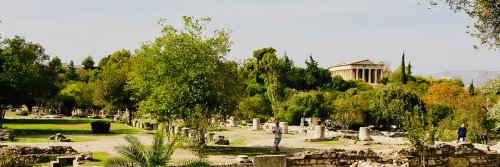
Walking around the ancient ruins of Athens, travelers are transported back in time, quite often with an overpowering sense of awe. For anyone who studied ancient history in school, it’s an overwhelming feeling of wonder to stand amid the pictures you once flipped through—fascinated by, yet bored with, the abstract idea of a foreign place where democracy, philosophy, and art flourished.
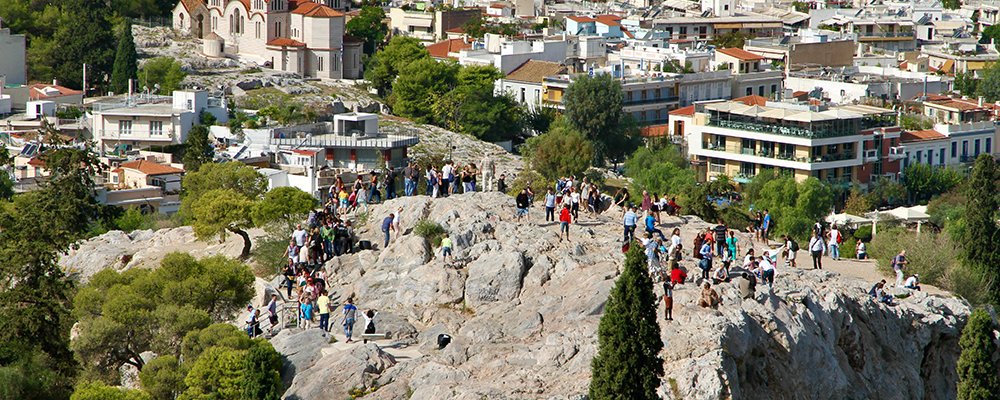
The ancient gems where Plato and Socrates walked:
The Acropolis and Parthenon
A remarkable ancient citadel that stands as a symbol of classical Greece and Western civilization. Located on a rocky hill overlooking Athens, the Acropolis served as a fortress, religious center, and a testament to the artistic and architectural achievements of the ancient Greeks. Although the site dates back to the Neolithic period, the most famous of its structures were built during the 5th century BCE, Athens' Golden Age under Pericles. The iconic structure at the Acropolis is the Parthenon, a temple dedicated to Athena, the city's patron goddess. Built between 447 and 432 BCE, the Parthenon is known for its sculptures, especially the impressive friezes and the statue of Athena made by Phidias, which was once housed inside. Despite centuries of damage from wars, earthquakes, and pollution, it remains a symbol of ancient Greek cultural and artistic achievement.
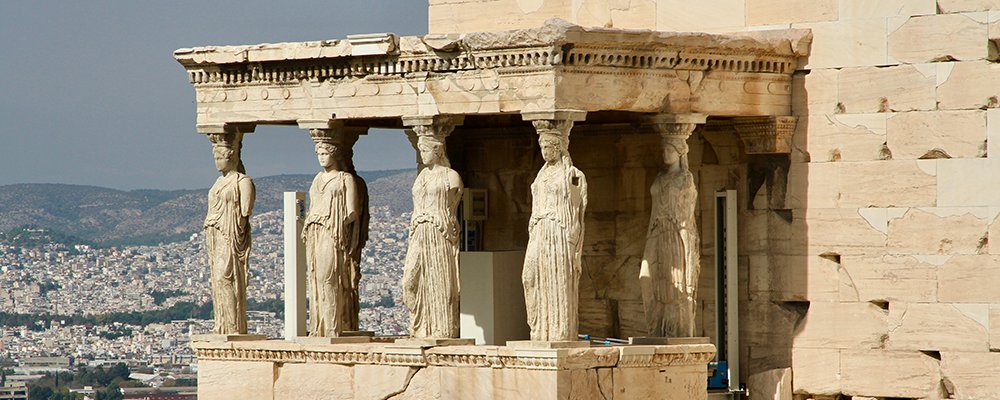
The Acropolis complex includes the Erechtheion, known for its unique asymmetrical design and the Caryatids—sculpted female figures serving as supporting columns—and the Propylaea, the grand entrance gate. A UNESCO World Heritage site and a major archaeological enclave visited by millions of tourists annually, it has long dominated Athens' skyline.
The Ancient Agora
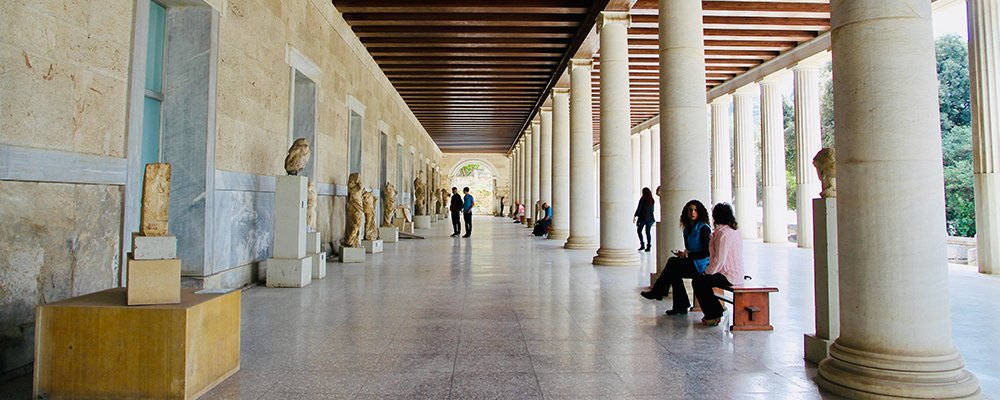
The name "Agora" means "assembly" or "gathering place" in Greek, highlighting its importance as a venue for civic engagement and the hub for Athenian daily life. Located northwest of the Acropolis, the Agora served as the city's heart, where citizens gathered to discuss politics, conduct business, and socialize. It was a vibrant marketplace and a hub for intellectual and cultural activities, reflecting the democratic ideals that Athens is famous for. Here, famous philosophers like Socrates, Plato, and Aristotle engaged in dialogue and debate, shaping Western thought. Socrates, in particular, was known for his method of questioning and discussion in the Agora, which helped develop critical thinking. The Agora's intellectual atmosphere made Athens a beacon of learning and innovation during its golden age.
The Agora once bustled with activity, housing numerous shops and stalls where merchants sold goods ranging from food and textiles to pottery and art. This marketplace facilitated trade not only within Athens but also with other regions, helping Athens become a powerful economic hub. The open space also hosted public speeches, performances, and religious festivals, making it a lively place that embodied the spirit of Athenian democracy and culture. You can meander through the remains of the preserved Temple of Hephaestus, visit the Stoa of Attalos, now a museum housing artifacts, poke your nose into the Church of the Holy Apostles, and walk the same roads citizens and merchants of the era trod.
Hadrian’s Library
The musty vault of ancient knowledge, Hadrian’s Library reflects the Roman Empire’s cultural sophistication in the 2nd century AD. Built during the reign of Emperor Hadrian around 132 AD, the library was part of a broader cultural and architectural program that fostered learning, scholarship, and civic pride in Athens, located in the Roman Agora. Strategically positioned in the heart of the city, the library symbolized the importance of knowledge and intellectual pursuits in Roman imperial ideology.
Impressive and majestic in design, it featured a large rectangular hall with a high vaulted roof, adorned with intricate decorative elements typical of Roman architectural style. The library housed a vast collection of scrolls and manuscripts, serving as a repository of Greek and Roman knowledge, and included rooms for reading and study, as well as a façade decorated with Corinthian columns and elaborate friezes depicting mythological and historical scenes. As a hub of intellectual activity, scholars and students gathered here to exchange ideas, conduct research, and debate philosophy. Over the centuries, the structure suffered damage, leaving it in partial ruin. Nonetheless, archaeological excavations have revealed much about its layout and architectural features, allowing historians and visitors to imagine its former splendor.
The Temple of Olympian Zeus
One of Greece's most impressive ancient monuments and a symbol of Athens' historical grandeur, the temple was dedicated to Zeus, the king of the gods in Greek mythology. It’s located near the city center. Construction began in the 6th century BCE under the Athenian tyrants (sole rulers), particularly Peisistratus, who seized power three times, but it wasn’t completed until the reign of the Roman Emperor Hadrian in the 2nd century. The temple was originally conceived as an enormous structure. It was intended to be the largest temple in Greece, reflecting the importance of Zeus worship and Athens’ ambition to display its religious and political dominance, wealth, and artistic achievement.
Designed in the ornate Corinthian style, it originally measured approximately 110 meters long and 50 meters wide, with a colonnade of 104 columns, each towering about 17 meters high. Only a few of these majestic columns remain today, as natural disasters, war, and human activity destroyed much of the temple over the centuries.
The Panathenaic Stadium
Where myth meets history, the Panathenaic Stadium is a historic, iconic sports venue with major cultural and athletic significance. Designed in 329 BC during the reign of the Athenian statesman Lycurgus to host the Panathenaic Games, a festival celebrating the goddess Athena, it underwent several renovations over the centuries, with the most notable reconstruction taking place in 1896 to accommodate the first modern Olympic Games, making it the birthplace of the modern Olympics. With its grand architecture, including seating for approximately 45,000 spectators arranged in a semi-circular fashion around the track, its design features classical Greek elements, including columns and decorative friezes. The Panathenaic Stadium is one of the most iconic symbols of Greek pride and craftsmanship.
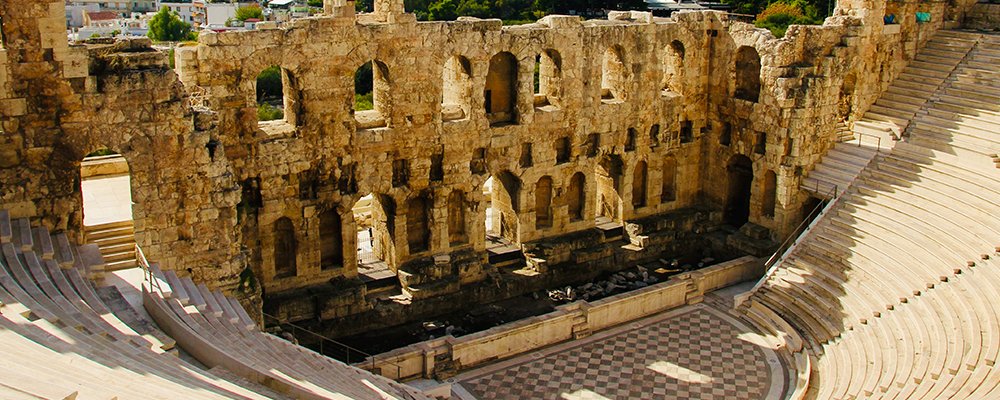
Today, the Panathenaic Stadium is used for various ceremonial occasions, including the lighting of the Olympic flame and other athletic celebrations. The stadium also hosts concerts, cultural events, and official ceremonies, continuing its legacy as a place of gathering and celebration. Visiting here, you can easily imagine the roar of crowds echoing over the track where ancient athletes competed, and if your weary legs can make it to the top, you can gaze over panoramic views of the city at your feet.
The best time of year to visit the ancient sites in Athens is spring (April to June) and fall (September to October), when fewer tourists and more pleasant weather make it comfortable to explore the outdoor attractions.
Gail Palethorpe, a self proclaimed Australian gypsy, is a freelance writer, photographer and eternal traveller. Check out her website Gail Palethorpe Photography and her Shutterstock profile.