
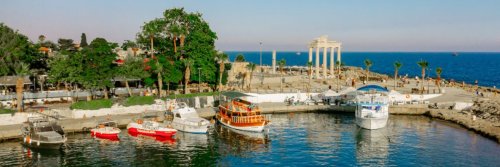
The imperious ruins of Ephesus, just outside Izmir, are the main draw for visitors seeking a dip into history. But the triumvirate of wonders, Apollo Temple, Miletus and Priene, sitting on the Aegean seaboard of Türkiye's Western region, are often overlooked.
Didyma, Miletus and Priene once formed part of a thriving cultural landscape shaped by religion, trade, philosophy and political ambition. Today, their magnificent ruins invite visitors to explore the achievements of the ancients and the enduring legacy of classical civilisation.
Didyma's Temple of Apollo
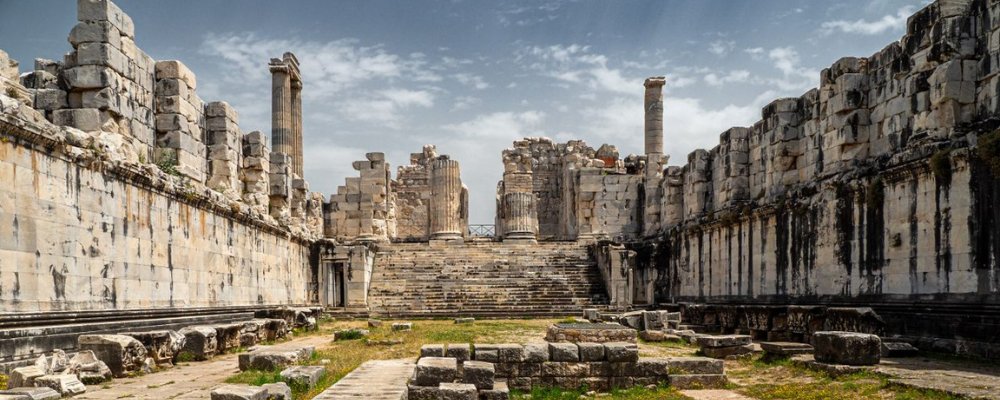
Modern-day Didim is well known for its sun, sea, and sand. But the biggest delight is at the top of the resort. The approximately 2,500-year-old Temple of Apollo is regarded as the third-largest temple in the world and is built in the Ionic style.
Prominent as an "oracle centre" of antiquity, the temple contains 112 columns, including the inner courtyard called the "naos" used for public worship, and the 17.5-metre-high "sacred" courtyard.
The temple, believed to be protected by the legendary Medusa, the serpent-haired, sharp-toothed female monster who was thought to turn anyone who looked into her eyes to stone, also features Medusa statues.
Visitors to the sacred area dedicated to Apollo, the god of music, art, the sun, fire, and poetry in Greek mythology, and a prophetic and divinatory deity, can witness the temple's well-preserved magnificent architecture.
The temple was renowned for its enormous scale and its oracle, which attracted worshippers and visitors seeking divine guidance from far beyond the surrounding region.
Unlike a typical Greek temple raised on a modest platform, the sanctuary at Didyma is distinguished by its colossal foundations, towering columns and monumental entrance.
Construction began in the Archaic period and continued through successive centuries, particularly under the Hellenistic rulers who sought to glorify the sanctuary. The temple was never fully completed, yet its unfinished state only adds to its fascination.
As you approach the ruins, look closely at the surviving marble columns and enormous stone blocks that reveal the builders' extraordinary ambition. The original temple featured a vast colonnade, while its richly decorated architectural details demonstrated the wealth and craftsmanship devoted to Apollo.
One of the most intriguing features is the temple's inner sanctuary, or adyton, a sacred area associated with the oracle. Unlike many Greek temples, whose central chambers were designed primarily to house a cult statue, Didyma incorporated an open-air sacred space within its monumental structure. Here, religious rituals and consultations with Apollo's oracle took place. Ancient accounts describe the sanctuary as an important centre of prophecy, where visitors sought answers about personal affairs, public decisions and the future of cities.
Miletus
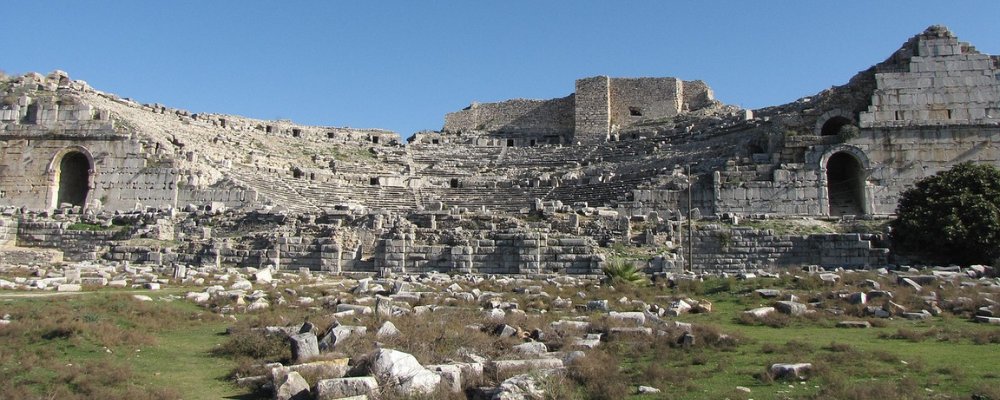
A short journey away lies Miletus, once one of ancient Ionia's most influential cities. Strategically positioned near the Aegean Sea, the city became a major maritime and commercial power, establishing colonies across the Mediterranean and Black Sea regions. Its prosperity supported impressive public buildings, intellectual activity and an ambitious urban landscape.
The highlight for most visitors is the magnificent Great Theatre of Miletus. Built into a hillside and enlarged during the Roman period, it once accommodated thousands of spectators. Climb the surviving stone seating to appreciate the scale of the auditorium and imagine the crowds gathering for dramatic performances, civic events and public spectacles. From higher levels, the surrounding landscape offers a glimpse of how the city's geography shaped its development.
Another important feature is the city's ancient harbour area. Although silting and changes to the coastline have left Miletus far inland today, the ruins recall its former maritime importance. What was once a busy port connecting merchants, sailors and travellers to distant destinations is now part of a broad, open landscape.
This dramatic transformation is one of the site's most compelling aspects: the ancient coastline has changed, but the archaeological remains preserve evidence of the city's former relationship with the sea.
Look for the remains of the Faustina Baths, a substantial Roman bathing complex named after Faustina, wife of Emperor Marcus Aurelius. Its surviving architectural elements, including vaulted spaces and sculptural details, provide insight into Roman bathing culture and the importance of public leisure. The baths illustrate how Miletus continued to develop under Roman rule, adapting its urban life to the customs and architectural traditions of the wider empire.
Miletus also holds a special place in intellectual history. It was associated with early Greek thinkers such as Thales, Anaximander and Anaximenes, whose attempts to explain the natural world through observation and reason helped lay foundations for Western philosophy and science. Walking among the ruins, it is fascinating to imagine a city where commercial exchange and maritime connections encouraged ideas to travel as readily as goods.
Priene
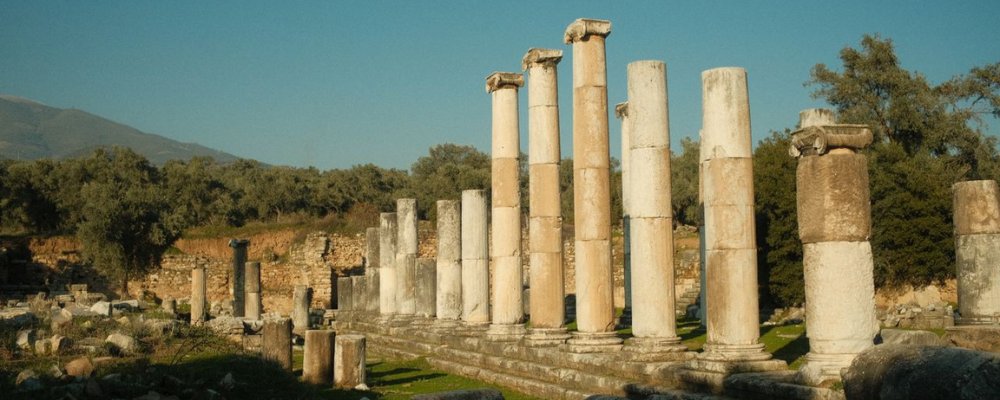
Set on the slopes of Mount Mycale, overlooking the fertile plain of the Büyük Menderes River, Priene is one of the finest places to appreciate the organisation and architecture of an ancient Greek city.
Much of the city visible today dates from the fourth century BC, when Priene was rebuilt according to a carefully planned grid. Its orderly streets, terraces and public spaces demonstrate a sophisticated approach to urban design.
Unlike the irregular layouts that developed in many ancient settlements, Priene was arranged with streets running at right angles, creating distinct residential and civic districts.
The most celebrated monument is the Temple of Athena Polias, dedicated to Athena, the city's patron goddess. Designed by Pytheos, an architect associated with the Mausoleum at Halicarnassus, the temple was an outstanding example of the Ionic architectural style. Its surviving columns stand against the hillside, creating a memorable contrast between pale stone, green vegetation and distant mountain scenery.
Nearby are the remains of the ancient theatre, where rows of stone seats descend towards the stage. Look for the distinctive seats of honour reserved for important citizens and officials. The theatre provides a vivid illustration of how entertainment, public gatherings and civic identity were intertwined in Greek society.
Continue through the ancient streets to discover the agora, the city's principal marketplace and meeting place. Here, merchants traded goods, residents exchanged news, and citizens participated in public life. The remains of stoas, or covered colonnades, help visitors imagine the sheltered walkways that once framed the bustling square.
Priene also contains the remains of a bouleuterion, the council chamber where civic affairs were discussed, as well as residential buildings that reveal how people organised their domestic lives. Some houses were arranged around internal courtyards, offering a glimpse into the practical design of ancient Greek homes.
The elevated setting, quieter pathways and expansive views encourage visitors to slow down and appreciate the local environment.
An architectural trio
These sites make a rewarding day trip, although history enthusiasts may prefer to spread the experience over a few days. Spring and autumn generally offer more comfortable sightseeing conditions than the hot summer months. Bring drinking water, sun protection, and a camera, especially when exploring the exposed ruins at Didyma and Priene.
 Andy Probert is a British-born, Cyprus-based journalist who covers aviation, hotels, travel, and various topics for publications worldwide.