Angola is the new frontier for many global wanderers.
It’s a country of breathtaking landscapes untouched by tourism, and home to some of Africa's most pristine and captivating national parks. These parks offer a sensory feast that immerses visitors in the natural world through a symphony of sounds, a tapestry of sights, and a medley of smells—the fragrant scent of wild herbs, blooming flowers, rare orchids, native plants, and occasionally the pungent smell of wildlife. The air is often thick with the earthy aroma of damp soil and lush vegetation, especially after a refreshing rain. As the sun rises or sets, the sky bursts into hues of orange, pink, and purple, creating a magical backdrop for wildlife encounters.
The sounds and smells of Angola’s national parks evoke a sense of adventure in a landscape of raw natural beauty. Whether it’s the cacophony of crickets on a warm evening, the startling burst of a predator’s call at dawn, or the fresh, invigorating air of a forested trail, the sensory experiences in Angola’s parks are unforgettable. These protected areas are vital habitats for endangered species and vital ecosystems. Exploring the parks is about connecting with the wild and unpredictable, breathing unspoiled air, and feeling the pulse of Africa’s wild heart.
Accommodation in Angola’s national parks is limited and requires advance booking. Options range from luxury expedition tents in remote parks to established riverside chalets near Luanda. Most wilderness areas require self-contained camping, guided tour packages, or staying in nearby provincial towns.
Iona National Park
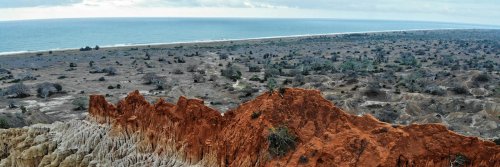
Sitting on the border with Namibia, Iona National Park is often considered the most beautiful of Angola’s parks. It’s one of the largest and oldest national parks in the country, with surreal, otherworldly desert landscapes, clusters of traditional Himba communities, weird rock formations, and plenty of wildlife to spot, such as oryxes and giraffes. It’s home to ancient plants (Welwitschia), vast arid landscapes and savannas that run to the horizon, dry riverbeds, rugged mountains, and deep canyons, covering approximately 15,149 square kilometers. It’s a harsh, dramatic, and picturesque land where elusive desert-adapted elephants, springbok, kudu, cheetahs, and leopards prey on smaller mammals, reptiles, and birds.
There are no formal lodges in the park, and you must be entirely self-sufficient. Most intrepid souls base themselves in the coastal town of Namibe, driving into the park for day trips on professionally guided, all-inclusive tours that include park fees, a guide, and transport (4-wheel drives are necessary).
Kissama National Park (Quicama)
Also known as Quicama, Kissama National Park is a renowned wildlife reserve located in Angola, situated just south of the capital city, Luanda. Covering approximately 3,085 square kilometers, this land is defined by rivers and beaches teeming with wildlife. The landscape of Kissama is a mixture of savannah, woodland, and patches of dense forest, with terrain that’s generally flat, dotted with gently rolling hills, seasonal rivers, and waterholes. One of the most notable inhabitants of the park is the African elephant, which roams the plains in large herds, playing a crucial role in shaping the landscape by clearing vegetation as ‘jungle destroyers’. Giraffes stretch their necks to graze on acacia trees, zebras wearing their pajama-stripes gather in gossip circles, while leopards, hyenas, and cheetahs consider the land their dinner table. Kissama also boasts a rich birdlife, with over 300 species recorded—eagles, vultures, ostriches, and various species of storks and kingfishers. Reptiles such as crocodiles and various snake species are also present within the park’s rivers and grasslands.
Kissama National Park is the most developed and accessible park where you can camp, so long as you have a four-wheel drive with all of your own kit, or take up the cushy alternative of a thatched chalet on the banks of the Cuanza River, Kwanza Lodge.
Luengue-Luiana National Park
Located in southeastern Angola, Luengue-Luiana National Park is one of the country's most significant and ecologically diverse protected areas, covering approximately 22,000 square kilometers. This vast remote wilderness is a mixture of expansive floodplains, river systems, patches of dense forest, and savannahs. It’s a part of the larger Kavango-Zambezi Transfrontier Conservation Area, which spans several countries as a vital ecological corridor connecting Angola with its neighbors: Namibia, Botswana, and Zambia, and aims to preserve the region’s unique ecosystems. Developing into a premium safari destination, it’s where African bush elephant populations thrive, roaming across the open plains and along riverbanks. Lions and leopards prey on other inhabitants such as the large herds of antelope, including roan, sable, and oribi, which graze on the lush grasses and browse the woody shrubs. It’s a playground for Cape buffalo, hippopotamus, plains zebra, giraffe, sable antelope, roan antelope, kudu, waterbuck, and impala, and is also inhabited by various primates, such as baboons and vervet monkeys, as well as smaller mammals like civets and hyraxes. For the twitterers, there are over 400 bird species, including waterfowl, wading birds, African fish eagle, herons, storks, and kingfishers, which thrive around the wetlands and rivers.
This massive national treasure, historically known as the ‘Lands at the End of the World,’ is super difficult to access but does offer an expedition-style camp, the Luiana Plains Expedition Camp, with 10 Meru-styled tented suites. With a soft opening in June 2026, it will be fully operational by 2027.
Other national parks to consider include Cameia National Park, Cangandala National Park, Bicuar National Park, Mavinga National Park, and Mupa National Park.
Gail Palethorpe, a self proclaimed Australian gypsy, is a freelance writer, photographer and eternal traveller. Check out her website Gail Palethorpe Photography and her Shutterstock profile.