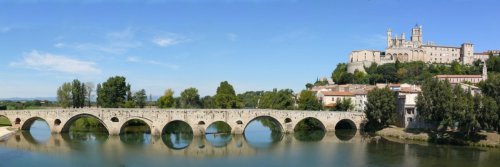
Every Easter Monday, Béziers in southern France celebrates the Fête de l’Omelette Géante—a festival where eggs are plentiful, pans are enormous, and nobody leaves wondering what’s for brunch.
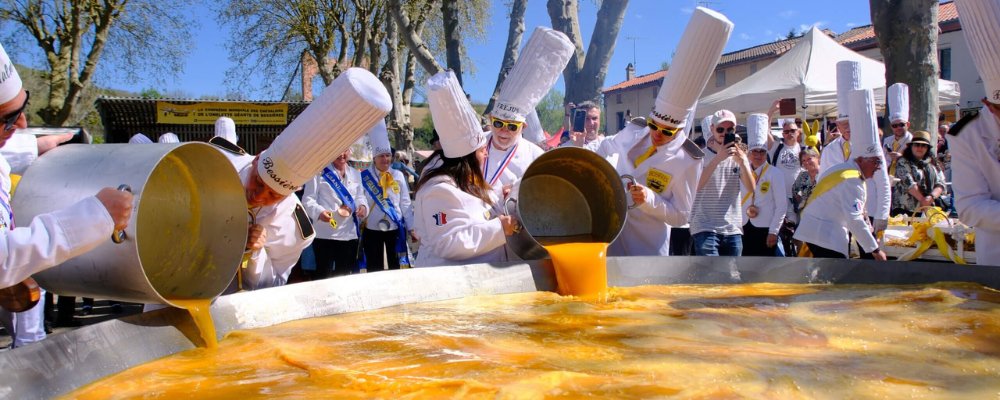
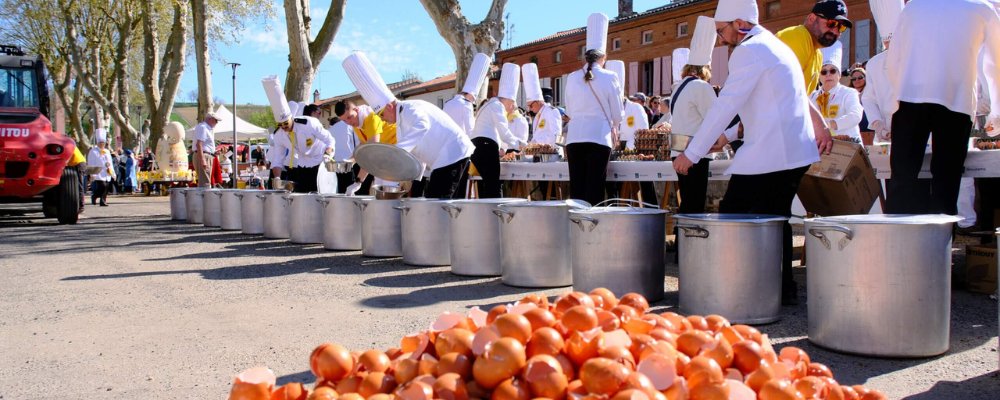
In the town’s main square, members of the Brotherhood of the Knights of the Giant Omelette crack more than 15,000 eggs into a steel pan about four meters wide. Dressed in white cooks’ uniforms and tall hats, they work over a wood fire, stirring the mixture with long wooden paddles that look more suited to rowing a boat. Duck fat, salt, pepper, and fresh herbs go in too. When the giant omelet is cooked, thousands of visitors receive a free serving. At this scale, “just one more bite” becomes a logistical operation.
The cooking is a spectacle: towering flames, a pan large enough to qualify as local infrastructure, and cooks coordinating their movements like an unusually well-fed marching band. Crowds gather to watch the eggy drama unfold, then share the meal. The festival also includes music, dancing, and parades, but the omelet is very much the headliner.
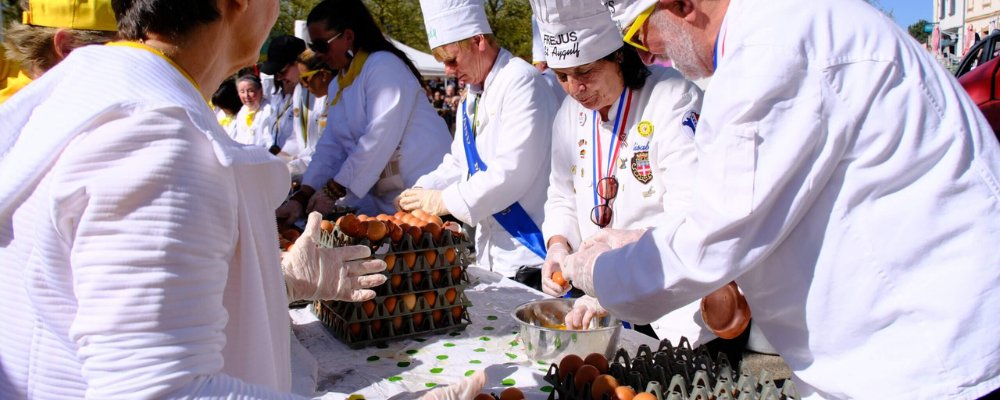
The first gathering, held in the 1970s, used only a few thousand eggs. Since then, the celebration has grown—and apparently found friends abroad. Similar events now take place in six other cities, including Fréjus in France and Pigüé in Argentina. Meanwhile, some French families host their own omelet parties at home, where the pan is smaller, and there is plenty of pastis to go around.
The festival’s original story features Napoleon Bonaparte, who is often linked to the saying, ‘An army marches on its stomach.’ Whether he actually coined the phrase is uncertain, but the principle is hard to argue with. Soldiers need food, and feeding a large army traveling across long distances was a serious challenge. Napoleon’s campaigns depended not only on strategy and discipline, but also on reliable supplies—because even the most ambitious military plan can falter when everyone is hungry. According to local tradition, Napoleon and his troops once stayed in the area. A local innkeeper served him an omelet, which the commander supposedly enjoyed. Napoleon then ordered the townspeople to gather eggs from the surrounding countryside and prepare a giant omelet for his soldiers the next day. The troops shared the meal, and a simple dish became a memorable communal feast.
Whether this eggy episode really happened is uncertain; it belongs more to local legend than firmly documented history. But it captures a practical truth: armies had to make do with whatever food was available. And in Béziers, that idea has grown into a tradition where the troops are replaced by tourists, the battlefield by a town square, and the most pressing question is whether there’s enough omelet to go around.
If you’d like to join the festivities in Béziers, book accommodation six to nine months ahead. The town is small, and festival crowds can make it feel as though the population has doubled overnight—perhaps because everyone has heard there’s free omelet. Toulouse is another place to stay, around 30 kilometers away.
Napoleon’s influence in France extends well beyond battlefields and omelets. More than two centuries after his death, his name still appears on menus and in culinary stories. He rose from military leader during the French Revolution to emperor, expanding his power across much of Europe and alarming rivals in Britain, Russia, Austria, and Prussia. Amid all that political upheaval, he apparently appreciated good food. His era also coincided with the rise of French haute cuisine, which gave history plenty of opportunities to put a famous name on a plate. Chicken Marengo, Lobster Thermidor, and the layered custard pastry called a Napoleon have all been linked to the emperor. But, like the omelet tale, some of these connections are disputed. Their origins may be less certain than the recipes—and perhaps about as reliable as the story of George Washington and the cherry tree.
Still, these culinary legends are entertaining reminders that food, history, and travel often share a table.
Gail Palethorpe, a self proclaimed Australian gypsy, is a freelance writer, photographer and eternal traveller. Check out her website Gail Palethorpe Photography and her Shutterstock profile.