Finding mojigangas, a cultural art centrepiece of the stunning township of San Miguel de Allende, was one of the highlights of meandering the colorful streets of this UNESCO World Heritage-listed city. Especially when you randomly come across one that is obviously in a hurry, scurrying down a street to presumably use a loo! There was no polite stop-and-chat with the locals or tourists for this wonderful big creation.
Predominantly standing around in Plaza Allende with a highbrow, nonchalant air, these traditional giant puppets, made of papier-mâché, are characterized by exaggerated facial features, bright costumes, and lively movements, making them a captivating spectacle, especially during local celebrations. Originating from 17th-century Spanish and local indigenous influences, mojigangas are used to entertain crowds and symbolize various cultural themes, from humour to social commentary. During festivities, artists such as Hermes Arroyo (3rd-generation artist) meticulously craft mojigangas, often depicting characters from local folklore and popular culture, as well as satirical figures that reflect societal issues. These puppets are animated by performers who dance, parade, and interact with the crowd, infusing the streets with energy and laughter. Beyond their entertainment value, mojigangas serve as a means of storytelling and community expression.
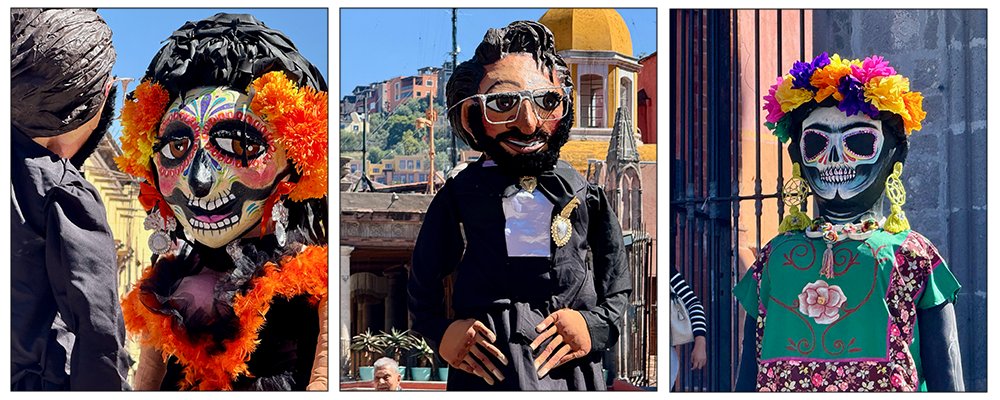
If no festival is happening, don’t despair, as there are usually a few of these fabulous giants, akin to big-headed dopplegangers, lurking around the plaza for the sake of tourists at any time of the year. Plaza Allende (aka Zocalo aka El Jardin aka The Main Garden or merely The Garden) is the bustling heart of San Miguel de Allende and the focal point for chilling locals sipping coffee, oldies on benches chatting, tourists oohing and aahing at the surrounding architecture, children slurping on sugary water drinks, or the cool set indulging in cocktails at one of the many surrounding cafes. The architecture surrounding the plaza is a showcase of Spanish colonial charm (16th to 18th centuries). Pastel-washed buildings, wrought-iron balconies, and stone colonnades. The iconic pink spires of the neo-gothic Parroquia de San Miguel Arcangel dominate as it spreads its long shadow over the baroque Templo de San Francisco, and the maze of tree-lined cobblestoned streets spiralling off the plaza.
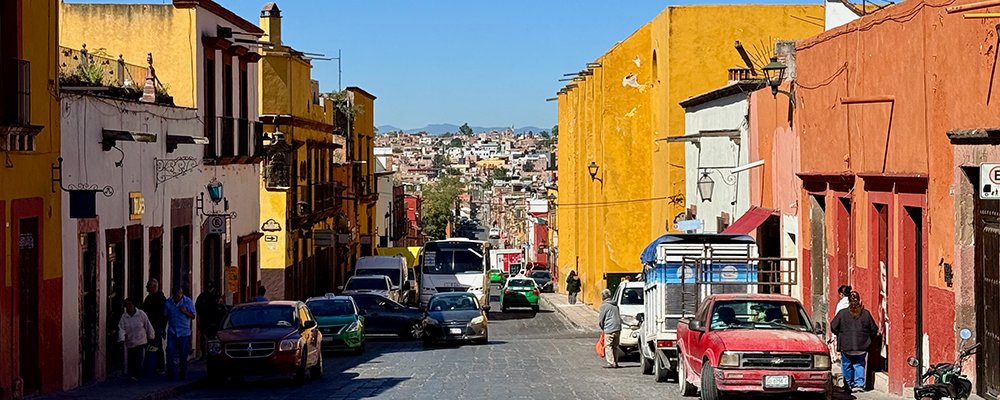
San Miguel de Allende has been featured in numerous travel magazines and is consistently ranked among the world’s most beautiful cities for its culture and charm. A picturesque colonial city in central Mexico, it boasts a rich history dating back to pre-Hispanic times, when it was inhabited by indigenous peoples such as the Otomi and Chichimeca. The city’s strategic location along ancient trade routes contributed to its development as a vital cultural and commercial hub. In the early 16th century, Spanish conquistadors arrived, establishing a settlement that would later be named in honor of its founder, Juan de San Miguel, and the revolutionary leader Ignacio Allende, who played a pivotal role in Mexico’s fight for independence. During the colonial period, San Miguel de Allende flourished as an important religious center, which is evidenced by the number of buildings in the city devoted to religion.
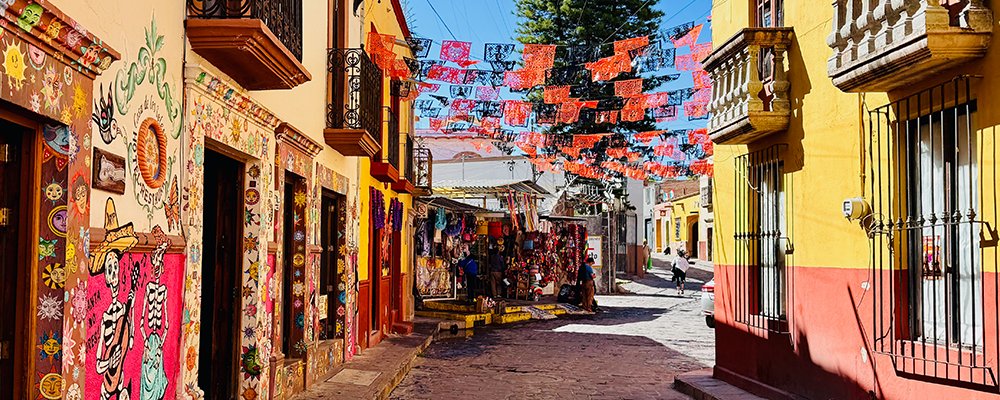
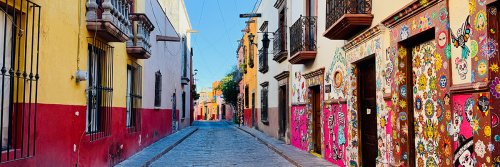
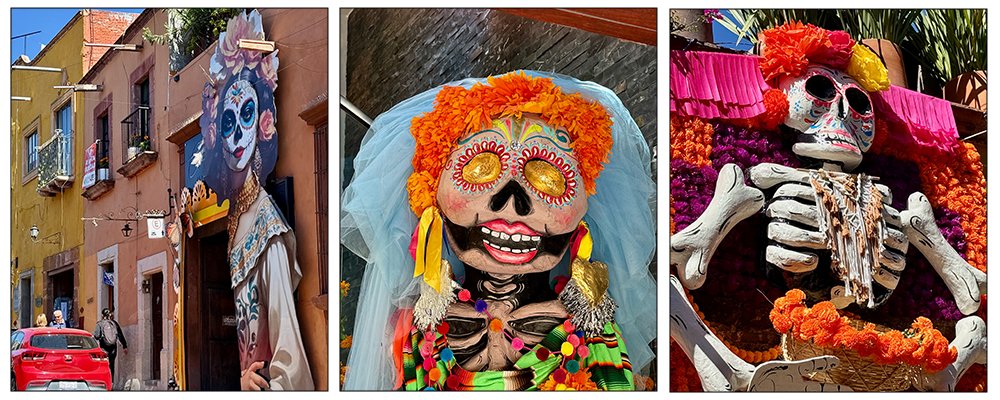
Meandering the skinny sidewalks, many uphill and downhill, is a journey of discovery. The main streets, such as Calle Recreo and Calle de la Parroquia, are lined with beautifully preserved buildings and colorful murals. These streets are often hotbeds of bustling local markets, cafes, art galleries, and shops, creating the town’s buzzing atmosphere. Narrow alleys and winding lanes, like Calle de Sollano and Calle Corregidora, add to the town’s quaint charm. Behind high walls, you can glimpse hidden courtyards and historic churches. The streets are littered with numerous art studios and workshops, showcasing works by local and international artists, giving the city an elegant bohemian air and reflecting San Miguel’s reputation as an artistic hub. The Instituto Allende, an art school established in the 1950s, attracts students and international visitors seeking creative inspiration. It’s a full-on sensory experience—aromas of local cuisine, sounds of street musicians, and the sight of colorful decorations during festivals such as the Day of the Dead, when skeletons are draped everywhere your eyes wander.
The craft markets, especially Mercado de Artesanías, are perfect for the shopaholic looking to pick up exquisite handmade jewelry and gorgeous textiles. Those into a bit of self-pampering can venture to the nearby Sanctuary of Atotonilco, often called the Sistine Chapel of Mexico, famous for its stunning murals and spiritual ambiance. The hot springs and natural pools in the area, such as La Gruta, offer relaxation and wellness amid lush surroundings. Nature lovers and adventure seekers can explore nearby hiking trails, mountain biking routes, and horseback riding opportunities through the stunning surrounding landscapes.
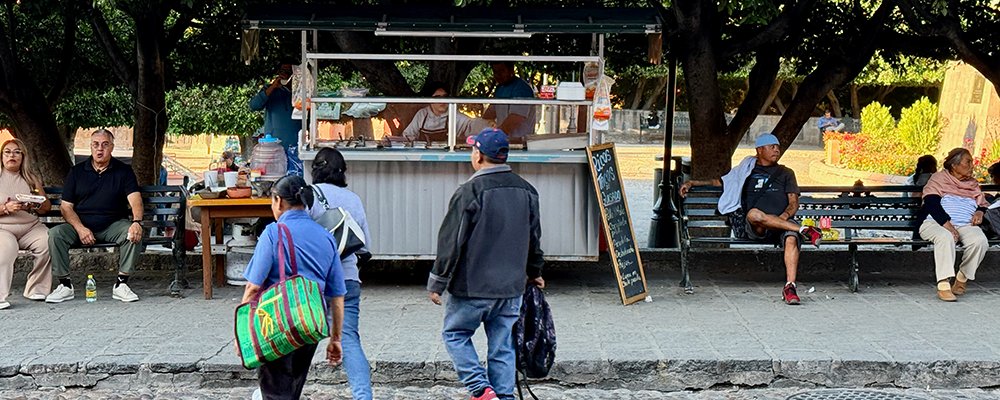
And for those who like to do long lunches after torturous (some of the streets are quite steep) bouts of walking, quite often navigating tourist hordes, there are plenty of contemporary cafes and outstanding restaurants to satisfy the most discerning palate.
Gail Palethorpe, a self proclaimed Australian gypsy, is a freelance writer, photographer and eternal traveller. Check out her website Gail Palethorpe Photography and her Shutterstock profile.