
You’re watching one of David Attenborough’s wildlife documentaries with his warm dulcet tones, his hushed whisper of awe, and a wish that you could be perched right beside him while peering at one of the most amazing animals in the world, sometimes endangered, that captures your heart. His knowledge and empathy for creatures are reflected in his melodic cadence and dramatic voice pitches that lure your inner adventurer to the possibilities of traveling to far-flung destinations where you may see the world through his eyes.
Various conservation bodies classify almost 4,000 species (birds, fish, reptiles, marine and land animals) as critically endangered, as they face severe threats such as poaching, climate change, and habitat destruction, which could soon bring about their extinction.
To see some of these amazing creatures in their own natural world and play David Attenborough yourself, head to one of the national parks below that are global hotspots for specific wildlife:
Sunda Tiger (Sumatra)
Found on the Indonesian Island of Sumatra, it’s estimated that only a few hundred remain in the world. Also known as the Sumatran tiger, it’s a critically endangered tiger subspecies. This majestic feline is rather small when compared to other tiger subspecies, with males weighing up to 100 kilograms and females slightly less. Wearing a rich orange fur coat with bold black stripes, the Sunda tiger is perfectly camouflaged in the dense rainforest habitats where it lives. These tigers are elusive, nocturnal, and solitary, making sightings very rare. You can find the Sunda Tiger in the wild at national parks such as Kerinci Seblat (Central Sumatra), Gunung Leuser (Northern Sumatra), or Bukit Barisan Selatan. This UNESCO site stretches from Lampung to Bengkulu Province.
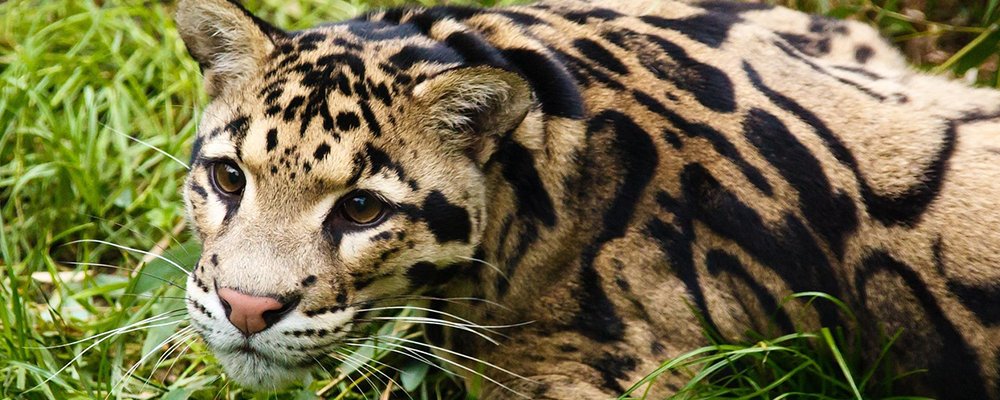
Clouded Leopard (Southeast Asia)
These cats are totally distinctive for their cloud-like markings on their thick, soft fur. Clouded leopards spend most of their lives in the treetops of dense forests in remote wilderness chasing their next meal of monkeys, birds, and small mammals. Elusive, rare, and totally fascinating, they can be found across Southeast Asia in Thailand, Malaysia, Cambodia, Vietnam, and Indonesia. A hotspot for a possible sighting is Virachey National Park in northeastern Cambodia, one of the critical sanctuaries where clouded leopards still roam freely in the wild. Covering approximately 1,284 square kilometers, the park is part of the Eastern Plains Landscape, a biodiversity hotspot; its rugged terrain, dense forests, and abundant water sources make it a perfect home for Clouded leopards.
Saola (Annamite Mountains, between Laos and Vietnam)
Bring your childhood fantasies to life by trying to see the elusive Saola, which is referred to as the ‘Asian Unicorn’.
Only discovered in 1992, this fairytale creature hides in the remote, wild Annamite Mountains along the border between Laos and Vietnam, where rugged terrain and wet broadleaf evergreen forests at elevations between 400 and 750 meters make the perfect hidden paradise for these shy creatures to call home. Critically endangered, the Saola is a slender, antelope-like creature with distinctive long, straight, and sharp horns that can reach up to 50 centimeters in length. Its appearance is unique, with a small head, large eyes, and a body that blends seamlessly into the forest environment. The animal is primarily herbivorous, feeding on a variety of grasses, leaves, and shrubs, which it forages in the dense undergrowth. You would be very lucky to see a saola, as its existence was confirmed through photographs and samples collected by researchers, making it one of the most mysterious large mammals in the world.
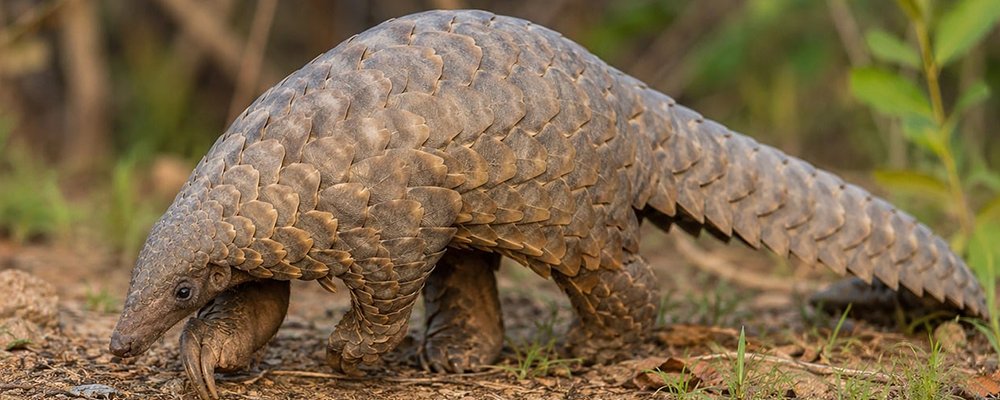
Pangolins
Funny-looking, quirky, and fascinating, pangolins are also known as ‘scaly anteaters’ because of their strange appearance. They are covered in large, protective keratin scales that form a formidable armor, making them one of the most unique mammals in the animal kingdom. Despite modern science proving that their scales have no medicinal value at all, the Chinese, Vietnamese, and various African nations have poached these creatures for centuries to concoct ‘miracle’ medical treatments. There are eight species, four in Africa and four in Asia, of these peculiar little animals that, when threatened, can roll into a tight ball with their scales acting as a protective barrier against predators such as lions, hyenas, and large birds of prey. These solitary creatures primarily inhabit forests, grasslands, and savannas, where they rely on their keen sense of smell to locate ants and termites—their main diet. Their long, sticky tongues can extend up to 16 inches, enabling them to gather insects from deep within nests efficiently. Pangolins are primarily nocturnal, spending much of their time foraging at night, and they are excellent diggers, using their powerful claws to excavate burrows or access insect colonies.
From the Mountain Gorilla, Javan Rhinoceros, and the Mountain Pygmy-Possum to the Sumatran Orangutan and many others, the world is losing these wonderful animals due to habitat loss, poaching, and water pollution, to name a few hazards to their continued existence. So, play David Attenborough and get the bragging rights; travel to see the animal world through his eyes before they disappear entirely.
Gail Palethorpe, a self proclaimed Australian gypsy, is a freelance writer, photographer and eternal traveller. Check out her website Gail Palethorpe Photography and her Shutterstock profile.