Peru, a country rich in history and culture, hosts some of the most frightening and macabre festivals that reveal its dark and mysterious traditions. Totally intense and intimidating for onlookers, these festivals are rooted in Andean, Spanish colonial influences, Christian, Catholic, and Indigenous traditions, often characterized by violent, chaotic, or highly emotional scenes.
With approximately 3,000 festivals annually, not all are of the scary variety; they are deeply tied to local patron saints, with one of the main national celebrations being Inti Raymi (June), the Festival of the Sun, held in Cusco and honoring the Inca sun god. The Pachamama festival in the Andes honors Mother Earth with offerings and rituals to ensure agricultural prosperity. Food also plays a crucial role, with local specialties such as cuy (guinea pig), tamales, and chicha (a fermented maize drink) integral to celebrations.
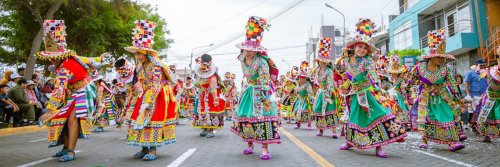
Peru’s love of festivals extends beyond grand national city celebrations to smaller, regional events in remote villages, where the most intense events happen in extremely remote locations or at high altitudes that are equally significant. Festivals are a whirlwind of colorful costumes, elaborate masks with often ‘sinister’ or ‘demonic’ faces, and parades with a bedlam vibe that attracts visitors from around the world.
Here are some of the most intense festivals in Peru:
Takanakuy (Cusco region), December
A violent and ritualized fighting festival for community members to settle disputes from the previous year. In other words, if you have a disagreement with your neighbor, you can legitimately take a swing at them in the middle of a ring of people.
Chiaraje (Cusco region), January
Another traditional ‘fighting festival’, but this time between different communities and villages—it’s a free-for-all.
Virgin del Carmen de Paucartambo (Paucartambo, Peruvian Andes), July
One of the biggest festivals is known for its intense religious celebration. It features massive processions and 'disturbing' dancing that depict, mock, and display the dark aspects of the colonial past. All of this honors the town’s patron saint.
The Qoyllur Rit'i pilgrimage (Sinakara Valley, Andes Mountains), late May/early June
This festival combines Catholic and indigenous beliefs. Thousands of pilgrims walk to a sacred glacier to pray and dance. The journey involves a dangerous trek high into the freezing Andes, where scary rituals are held. The non-scary part is the traditional music played on panpipes and charangos, as well as dances like the Huayno. The Huayno is a playful dance featuring a man and a woman, with lots of handkerchief-waving—maybe to keep warm.
The Festival of the Lord of Miracles (Lima), October
It is primarily a religious event with a haunting aspect. Its somber processions and depictions of suffering and sacrifice mark the occasion. The image of Christ, covered in black cloth, moves through the city streets, evoking awe and fear among onlookers.
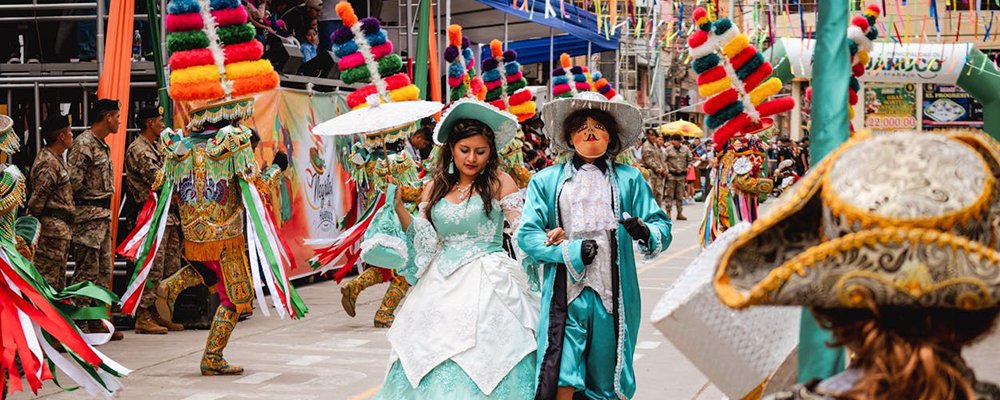
The Festival of the Candelaria (Puno), late January/early February
During this event, participants wear vivid costumes and masks, often representing spirits, demons, or mythological creatures, combining indigenous beliefs with Catholic traditions.
The dances and rituals are performed to ward off evil spirits and ensure good harvests. Frightening masks and supernatural themes give the festival a ghostly vibe. In the highlands, some festivals include exorcisms and rites to cleanse spirits, which can be quite intense and frightening.
Fiesta de las Cruces, aka Festival of the Crosses (Cusco), May
Crosses are decorated and paraded through villages. Some rituals invoke spirits or ancestors. The eerie silence at certain festival points, combined with skulls, bones, and other macabre decorations, creates a spooky, unsettling atmosphere.
Other festivals include the nationwide Holy Week held during the week leading up to Easter Sunday. In cities such as Ayacucho, the parades are distinctly solemn and often macabre candlelit processions depicting deep agony to the sounds of haunting church bells ringing out in historic plazas. In the Ayacucho Highlands, you may come across a Jarjacha Representation, which may make the hair on the back of your neck stand up. Jarjacha is a legendary monster born out of incest with a human face on a llama’s body. A scary part of local folklore in the rural area, it instills fear into those who believe the legend. Not a festival or celebration, but an intriguing destination nevertheless, is the Witches Market in Cerro de las Brujas in Huanuco. If you're in Lima, head to the Witch Market there. This is where you can get the wobblies learning about dark shamanism and the use of animal parts in spells for ‘good luck, love and protection’.
Watching these festivals offers a glimpse into the country’s mysterious and haunting traditions and its complex relationship with mortality, revealing a side of Peru that is both fascinating and slightly frightening.
Gail Palethorpe, a self proclaimed Australian gypsy, is a freelance writer, photographer and eternal traveller. Check out her website Gail Palethorpe Photography and her Shutterstock profile.