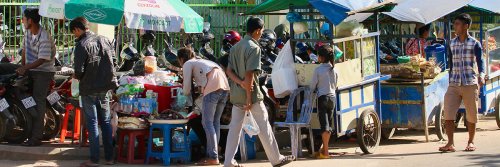
Like most Asian countries, local food is a movable feast that you can find waiting for you on a dusty street corner, littering the outside of undercover city markets or rural shanty markets, or slowly being pushed by you as you meander along riverbanks or the colorful, bustling streets. The aromas tweak your nose and make your mouth water in anticipation, while you become bug-eyed at what is being pushed on a cart past you. It’s meals on wheels!
The history of street food in Cambodia is a vibrant reflection of the country's heritage, resilience, and evolving culinary traditions. Street food has been an integral part of daily life for centuries, serving as a vital source of affordable, accessible, and flavorful nourishment for locals. Its roots can be traced back to ancient times, when bustling markets and roadside vendors offered a variety of traditional dishes that showcased diverse culinary influences, including Khmer, Chinese, Vietnamese, and French cuisines.
During the Angkor period (9th to 15th centuries), local food vendors would sell simple yet hearty meals to laborers and pilgrims visiting the temples, laying the groundwork for a thriving street food culture. The French colonial era (1863-1953) introduced new ingredients and cooking techniques that blended with traditional Khmer recipes, creating unique dishes. Street vendors expanded their offerings to include French-style baguettes, pâtés, and coffee, which remain popular today. The post-independence years saw a resurgence of local street food as vendors adapted to the country's socio-political changes and economic challenges.
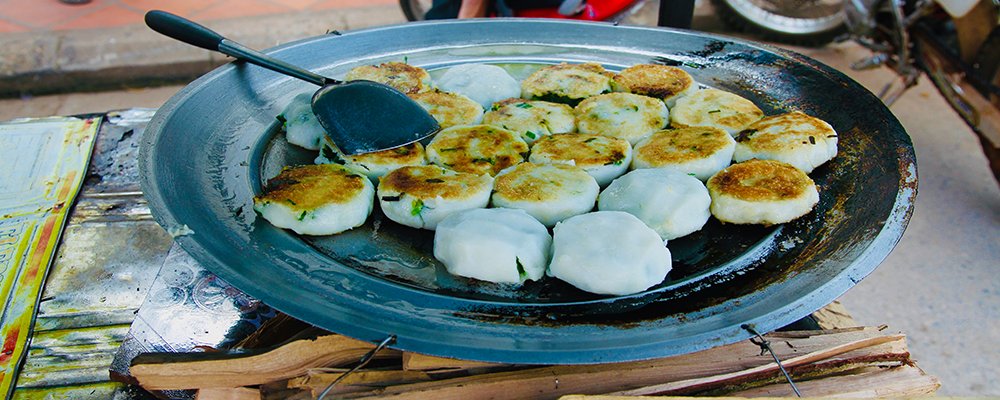
After the Khmer Rouge regime (1975-1979), street food played a crucial role in rebuilding community life and economic stability. Vendors began to set up stalls in markets and along busy streets, selling everything from rice noodles and grilled meats to tropical fruits and desserts. These foods became not only a means of sustenance but also a way to preserve cultural identity amid hardships and social upheavals. The famous Khmer dishes, Amok Trey (fish curry steamed in banana leaves) and Kuy Teav (noodle soup), are staples often sold by street vendors, reflecting Cambodia’s culinary depth and regional variations.
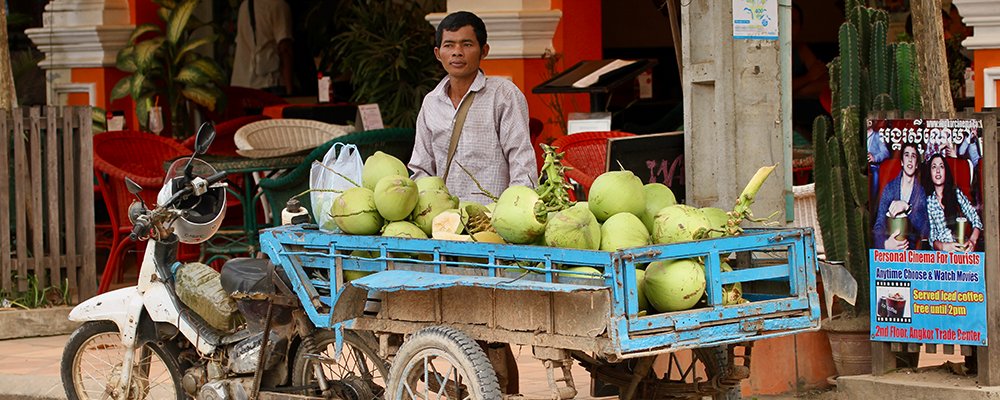
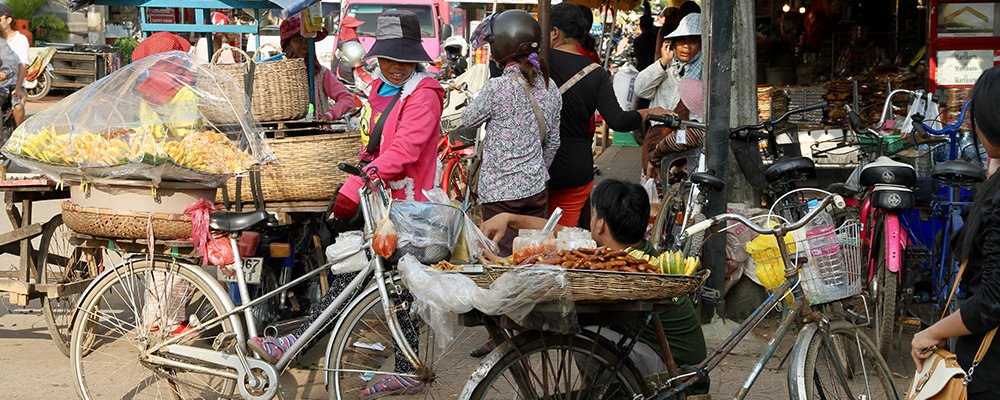
In the 21st century, Cambodia’s street food scene experienced a renaissance, driven by tourism and urbanization. Phnom Penh, Siem Reap, and other cities have seen a proliferation of street food stalls, many on wheels, offering a mix of traditional and modern dishes. This growth has been complemented by international influences, with vendors experimenting with new flavors and presentation styles to attract both locals and visitors. Despite modernization, many street food vendors continue to uphold traditional recipes passed down through generations, maintaining authenticity and cultural significance. How they juggle dishing up such fare from rickety two-wheeler contraptions, or on the back of bicycles, is a wondrous feat of dexterity.
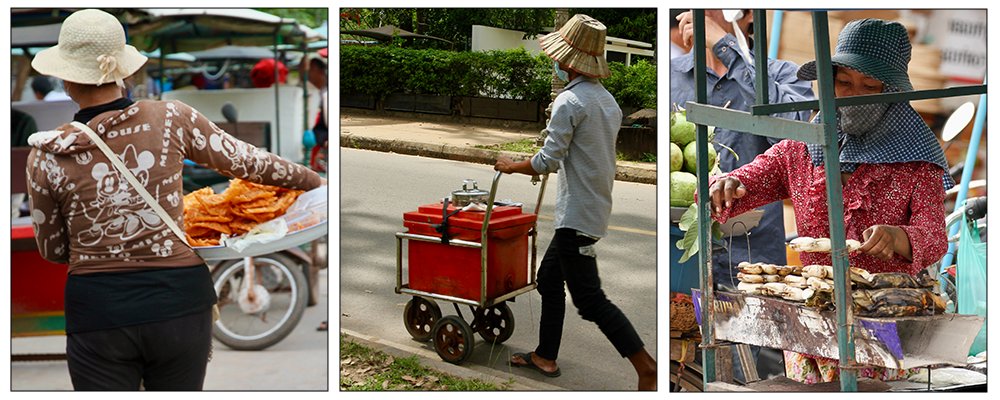
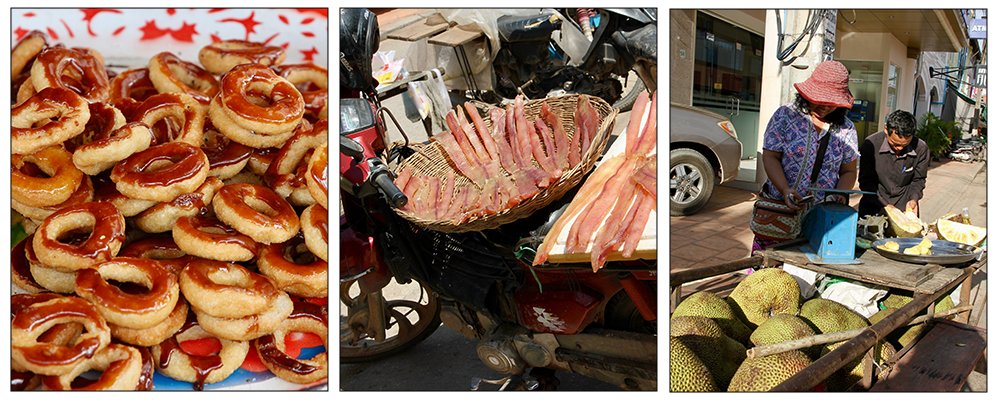
And for the gourmand with exotic tastes, insect consumption in Cambodia is rooted in centuries-old traditions, primarily driven by necessity. These ‘foods’ are not only a testament to the resourcefulness of local communities but also provide a sustainable source of protein that has been consumed for generations. The most famous exotic street food is the tarantula. These large spiders are often deep-fried until crispy and sold by street vendors in places like Skuon, also known as "Spider Market," located near Phnom Penh. Typically seasoned with garlic and salt, it’s often described as tasting similar to fish or chicken, with a slightly earthy flavor. Said to be crunchy with a thick, chewy, sometimes gritty interior, you can even feel the hairy legs tingle the inside of your mouth. You just have to wrap your head around putting a spider in your mouth! Tarantulas are said to have health benefits such as boosting stamina and improving blood circulation.
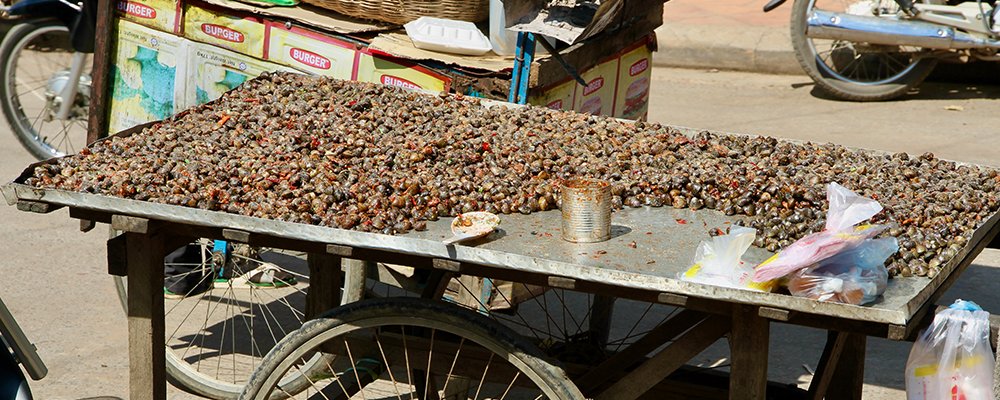
Ants, particularly red ants, are another popular street snack. These ants are usually harvested from jungle areas and are often eaten fresh or roasted. Their tangy, citrus-like flavor makes them a distinctive ingredient in salads or eaten on their own. Considered to be a delicacy, ants are rich in protein. Definitely not for the squeamish, despite their creamy texture. Crickets and scorpions are also commonly sold by street vendors, especially in rural areas or during special festivals. Crispy fried crickets are enjoyed as a crunchy snack, often seasoned with spices. Scorpions, on the other hand, are typically skewered and fried, offering a chewy texture with a slightly smoky taste. Old eggs are another taste treat for the adventurous eater, known as ‘Balut’. It’s a fertilized egg of a 17-day-old duck or chicken that is boiled—oh yum! Stuffed frogs are a tantalizing bite for a daring diner. Grilled or fried, it’s a whole frog stuffed with pork, curry paste, and spices. Water snakes are fried on sticks, and snail porridge is the treat for many locals first thing in the morning. Snails are boiled and served with rice porridge, herbs, and lemongrass—sounds simply delicious. The one rare snack to watch out for is ‘chicken butts’. Yes, the fatty anus of a chicken that’s grilled on skewers.
Cambodia's street food scene is a vibrant and essential part of its culture, where getting a meal worthy of a culinary king means waving down a wheeled kitchen!
Gail Palethorpe, a self proclaimed Australian gypsy, is a freelance writer, photographer and eternal traveller. Check out her website Gail Palethorpe Photography and her Shutterstock profile.