Some best friends are perfectly lovely at home but become international travel hazards the moment they hit an airport, raising red flags as travel companions. These red-flagged souls don’t need to stay home alone, missing out on the fun forever, maybe just until they attend a brief course called ‘How to Travel with Grace and Consideration’. This is not a judgment of their character—but a gentle warning to customs officers, fellow passengers, traveling groups, restaurant servers, hotel staff, and literally everyone who may come across them in a foreign country.
Of course, nobody is born an expert traveler. A little patience, curiosity, preparation, and willingness to laugh at oneself can improve anyone’s journey. These travel-inept people need to make a passport checklist, pack a lighter suitcase, download a translation app, and always have one calm traveling friend who can read a map. With those tools, even the most bewildered traveler can cross a border without declaring war on the locals.
Indicators of ‘Red Flag’ travelers:
Unprepared
They arrive at the airport with no passport or an out-of-date passport, no ticket, and a vague memory that their flight is ‘sometime after lunch.’ They may be charming, but their travel strategy is to trust the universe and their travel buddy—but the universe has a strict boarding deadline, and no matter how good a friend you may be, they definitely won’t wait. Often found stranded in an airport, or asking a boarding-gate agent, ‘Is this the plane to Paris?’ while standing beneath a sign that clearly says, ‘Paris.’
Their confidence is inspiring; their travel companions’ eye-twitch is less so.
Chronic Overpackers
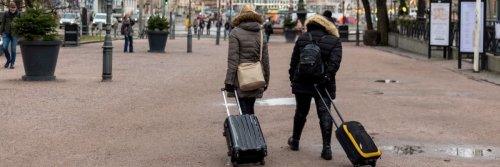
Their luggage is less ‘carry-on’ and more ‘carry-on, checked bag, and possibly a diplomatic shipment. They begin with a sensible list: passport, toothbrush, clothes. Then the imagination takes over. What if it rains every day? What if it snows in July? What if the hotel has no towels, or no pillows? Soon, they’re packing three coats, six pairs of shoes, a travel kettle, and enough snacks to survive a minor expedition. Overpackers live by the phrase ‘just in case.’ They bring medicine for ailments they’ve never had, chargers for devices they don’t own, and a formal outfit in case they’re unexpectedly invited to dine with royalty. They may even take a spare suitcase—empty, of course, for souvenirs. By day three, it’s already full of dirty laundry and a wooden elephant with a sparkly saddle.
At check-in, they look genuinely surprised when the bag is deemed overweight, and the airline charges extra. Then comes the familiar ritual: removing a sweater, a coat, and anything else they can put on, and pretending this was always the plan. People who always overpack for a holiday don’t pack a suitcase—they prepare for a small, unexpected relocation after an alien invasion.
Despite the chaos, overpackers are generous travel companions. They have plasters, tissues, snacks, sunscreen, and—somehow—a sewing kit. When someone says, ‘Does anyone have a pen?’ they produce one from a mysterious pocket, along with a packet of biscuits and a rain poncho. Overpackers may carry too much, but they travel with confidence. After all, when you’re prepared for every possible situation, the only thing you can’t prepare for is having to lift your own luggage, and this is when their traveling buddy may become their mule.
Culturally Challenged
Red-flagged travelers believe every custom should match their own. They complain that dinner is served late, the coffee is different, and the local regulations are ‘weird.’ Often, they are ignorant ‘cultural critics’ comparing every meal, bathroom, and public transport system to the one back home. They approach local food cautiously, as if it might teach them something. They scan menus for familiar words, then order the one dish that sounds safest: ‘chicken.’ When it arrives seasoned with unfamiliar spices, they look betrayed.
These travelers believe in the universal nature of convenience. They expect shops to open when they want, buses to arrive when they need them, and everyone to understand their accent after the third, louder attempt, believing that speaking louder makes a foreign language easier to understand.
The Schedule Tyrant and Souvenir Collector
The holiday is planned in fifteen-minute increments, including ‘spontaneous relaxation’ from 2:15 to 2:30. If a train is delayed, they react as though time itself has committed a personal affront. They carry color-coded spreadsheets and may attempt to enjoy a sunset while checking whether it will interfere with dinner reservations. Meanwhile, the souvenir collector has no sense of their luggage size and can never be found, as they have just ducked into yet another shop. They buy a ceramic vase, three wooden masks, a giant hat, and a souvenir snow globe, then stare in disbelief when the suitcase refuses to close.
Map Adverse Souls (can be an advantage)
They believe that maps are merely decorative and confidently lead you down the wrong street, past the same fountain for the fourth time, and insist, ‘I know where we are going; it’s just around the corner.’ They may eventually reach the destination, but only after accidentally visiting three neighborhoods and developing a close relationship with a confused pigeon. They are excellent at turning a ten-minute walk into a scenic expedition.
On the positive side, map-free travelers are often cheerful, adaptable, and wonderfully curious. The day can be full of surprises, including unexpected hills, dead ends, and the realization that the hotel is behind them. It’s exploring in free form!
The Drama King or Queen
The buddy who treats every unfamiliar situation as a personal emergency. A train platform with signs in another language? Worse still is a delayed train. ‘We may never get back to the hotel.’ A menu without pictures? Crisis. A hotel room with a light switch in an unexpected place? Time to call the embassy. They don’t simply arrive in a new country; they enter a live-action disaster film, starring themselves as the only person who noticed the danger. Their travel companions spend the holiday reassuring them that everything is ok.
But they are devoted to preparation for any situation. Their day bag contains three maps, two backup chargers, emergency snacks, a photocopy of every passport, and one mysterious packet of tissues that has survived several continents. They ask hotel staff for advice, then ask the same question again in the lobby, to confirm it's correct. Traveling with a drama diva can feel like touring the world alongside a very anxious tour guide.
Finally, some people think ‘travel’ means, ‘everyone else should adapt to me.’ They ignore signs, cut lines, don’t learn a few basic phrases of the local lingo, photograph strangers without asking, and treat local workers as background characters in their personal adventure film. These travelers don’t just need a passport; they need curiosity, patience, and awareness that the world isn't a theme park designed around their preferences.
Pick your travel buddy with care!
Gail Palethorpe, a self proclaimed Australian gypsy, is a freelance writer, photographer and eternal traveller. Check out her website Gail Palethorpe Photography and her Shutterstock profile.